Showing posts with label James Madison. Show all posts

Monday, February 15, 2016

The First Four


Today is the day that some of us get to stay home from work or school because -- presidents.

Given the impracticality of giving people the day off for both George Washington's birthday and Abraham Lincoln's birthday, the holiday bureau, or whomever makes these decisions, combined them into a single "President's Day" holiday.

To be honest, I don't think too many of us sit around pondering past presidents all day. No doubt we're too busy resisting the urge to take advantage of the great sale prices at our local Buick dealership.

But it is worth a ponder, especially when the question of who will be the next president looms so large on our consciousness.

It seems reasonable on President's Day to look at the question of the next president within the framework of past presidents, good and bad.

Who were the best presidents? Why are they favored and what characteristics did
they have that we would like to see in the next president?

Is it Teddy Roosevelt's muscular leadership style?

Wilson's idealism, the dichotomy of an unwavering belief in world peace contained within the frame of an unapologetic racist?

Is it Kennedy's particular blend of inspiration, pragmatism and a history scrubbed clean by tragedy?

Although they all brought unique qualities to the office, so much of what it means to be president can be found among the first few.

Consider that the "father of the Constitution," James Madison, conceived of the presidency mostly as a kind of clerkship, carrying out the wishes of the legislature, which he, veteran of many state legislatures that he was, considered to be the supreme representation of the will of the people.

But almost from the beginning, the chief executive's post captured the imagination of the electorate and the post, for better or worse, has come to epitomize the America of each president's time.

Ray Raphael convincingly argues in his book "Founding Myths" that this should not be so.

American history is so much more than a list of presidents, he writes.

The United States came about, Raphael says, not just because of the actions of great men, but, more importantly, by the collected actions of thousands of unnamed patriots.

Raphael writes that those leaders whose names now echo through the history books, sometimes falsely, were merely following the trends of history and the will of a people bent of self-governing; and that the study of American history these days suffers from a kind of "presidential chic."

He is essentially right, but its hard to write a history of everybody.

Regardless of the arguments to the contrary presidents have, from the beginning, symbolized their times and the nation they led, for better or worse.

And when it comes to making the most of symbolism, few compare to our first president.

George Washington may not have been the most lettered of the founders, but his
desire to be considered a gentleman fed a deeper understanding of symbolism, and of appearances than perhaps his more well-read patriots could appreciate.

Ben Franklin once quipped that left to their own devices a roomful of men would inevitably elect the tallest of them as their leader.

This was certainly true of Washington.

But luckily for us, this was his particular genius and he more than any other understood that everything he did would be precedent-setting -- everything from policy to protocol.

Few people held in awe by their contemporaries felt the weight of that responsibility more keenly and, as a result, considered every action a careful balance between preserving the prestige he required to lead the country, and what was best for that country in the long-term.

Consider that when Washington set out to visit every state, he was would usually
stop a mile or so outside of every town, climb out of his carriage and up onto his white charger and ride in ahead of his baggage train, the way the people would expect a military hero to do.

Today, that action might be seen as craven. But at the time, it was necessary to cement a disparate and far-flung people into having some kind of national identity.

As Madison said: "The Presidency alone unites the conjectures of the public."
But Americans tire of heroes and by the time he walked away from power -- making him the "greatest man in the world," according to King George III, his former enemy -- he was being pilloried on the highly partisan press of the day, much like any other politician.

If Washington was the example of everything we say we want in a president, his successor was the opposite.

Poor, brilliant, flawed, insecure, proud, patriotic John Adams.

Just as we had never had a president, we had never had a second president and
he wrongly believed that keeping all Washington's people in his cabinet -- a cabinet filled with political opposites held together almost entirely by the power of Washington's prestige -- was the right way to go.

Bad decision. Their loyalty was to Washington and Adams, a prickly patriot not well-suited to inspiring comrades to personal loyalty, was not well served by the decision.

Ever the paradox, the steadfast patriot who took on airs, Adams oversaw perhaps the worst and best actions a president has ever taken.

He allowed himself to be talked into signing the alien and sedition act, jailing those who wrote ill of the government; a more anti-American law it would be hard to imagine.

But while he was manipulated at home by his own party, and a temperament ill-suited to the constant criticism inherent in the office, he refused to be manipulated by the conniving French.

For the good of the country, he fulfilled the wishes of his political enemies -- Thomas Jefferson and James Madison -- and kept the nation out of war with France, something the self-confirmed Anglohile considered to be the greatest achievement of his one-term presidency.

Jefferson, whose flair for the dramatic was at its best when he held his pen, declared his too-close-to-call election to the office to nevertheless by a "second revolution" -- conveniently papering over the fact that it was brought about by another irony of American history.

His political enemy Alexander Hamilton maneuvered to provide Jefferson the votes he needed in the House of Representatives to break the electoral tie because Hamilton would rather have the country in the hands of an honorable man with whom he fervently disagreed, than a candidate from his own state he considered to be unscrupulous.

But it was Jefferson's successor, and legislative right hand, who was the first truly modern president.

By the time Madison took office, political parties or "factions" as the politicians of the day called them, had taken firm hold of the American political system, never to be dislodged.

Although he was among those who had warned of their dangers, Madison was also the political realist best-suited to roll up his sleeves and get dirty to get things done -- some at the time said all too willingly.

Years of making deals in the trenches of the Virginia Legislature and in the House of Representatives and Senate had prepared Madison for the inescapable facts of American politics, that compromise is necessary to get things done.

He was willing enough to do it, to risk his reputation both to history and his own "faction," for the good of the country.

History has been kind of Madison, and rightly so. But compromise, his signature skill as a founder, has lately fallen on hard times.

Public education undermined, our history re-written, compromise is now viewed not as the result of reasonable accommodation among reasonable people, but a weakness that shames the nation, particularly by some of those now running for the presidency.

There is a fine line to be walked in leading such a large, powerful and diverse country.

Absolutism is not leadership, and compromise is not weakness, it is a necessity.

Let's all hope we can elect a president who recognizes this.

Wednesday, November 5, 2014

Democracy's Death of a Thousand Cuts

It was Election Day yesterday, so naturally, I was sitting on my couch binge-watching my favorite program on Netflix.

It had not been a conscious decision -- to avoid election-related information on Election Day.

Rather, it was just that I knew I didn't have to be at work until 4 p.m., and so why not take advantage of having the house to myself?

But then I made the mistake of turning on the radio while I did the dishes, and something the host of program I was listening to said, made me pause.

He said something about hating elections and I realized, to my dismay, he was absolutely right.

I hate what elections are now in America, and, I'm not alone in suspecting, most Americans do as well.

Its not hard to find someone reminding us on Election Day about the sacrifices made by our troops over the years to secure and maintain the right to vote.

And they're right, they have.

And yet, we're more willing to put a yellow ribbon on our truck to honor that sacrifice than we are to exercise the vote they died to protect.

Not to worry, this is not a sanctimonious lecture about how we're all failing American democracy -- we are, that's a given at this point -- but more a rumination on why.

I have this James Madison quote taped to my computer screen at work, and I look at it every day: 
I believe there are more instances of the abridgement of freedom of the people by gradual and silent encroachments by those in power than by violent and sudden usurpations.
It's not quite on point, but it does catch the flavor of what I think is happening to us.

In fact, sometimes I think the single best way to increase voter participation would be to introduce a bill to eliminate it completely (I mean it's not as if they're using it), to force people to fight for it.

But it's not worth the risk, given the tepid response America has had to the "Voter ID" craze, an attempt in the name of democracy, to make it harder to vote, rather than easier.

Many blame the obvious villain. 

But it's not the media, or at least not the media in the traditional sense that most of us mean. 

As I pointed out in a Facebook rant several weeks back, the real tradition is American journalism is one of rank partisanship. It was there in the beginning even as it experiences a renaissance today.

The tradition of impartiality in journalism is relatively recent in the long view and those who bemoan our current state of news coverage and harken back for a simpler time would be amazed and disgusted at what passed for journalism in the time of the founding fathers. 

Nevertheless, quotes from Jefferson about preferring newspapers to government notwithstanding, the founders did see them as necessary, not because they were beacons of impartial truth; but because it was at least some way to get out a message about policy and information to a larger nation than democracy had ever been tried in before.

That's why they allowed newspapers to pass through the mails free of charge.

It was an imperfect system, but it was all they had.

Still, despite partisan and outright false newspaper reporting similar to what we have today, Americans still turned out for elections in droves in generations past.

Election Days of the past were marked by parades, riots, free beer, all for the purposes of gathering support at the polls. No, not the best environment for considered decision making, but let's remember the state of public education until the last century.

So if it isn't a partisan media, why don't we vote in large numbers anymore, particularly in the lower level elections which have such a disproportionately larger impact on our lives?

(Perhaps the exception in Pennsylvania proves the point. It's no accident that the governor's race will pivot almost entirely on the issue of public school funding, because voters have experienced it first-hand. When was the last time THAT was the major issue?)

Well, allow me to contradict myself now and say the media is certainly to blame, at least in part, for this voter malaise, to channel the spirit of President Carter

And by that I mean the media in the sense of advertisements, mailers, relentless e-mails and robo-calls and, yes, partisan television and web sites.

Remember, for the most part, this media is not reporting so much as passing along paid messages, messages paid for by the candidates or supporters. The media is merely the medium by which they are brought to your doorstep.

And, I think that's because those media vehicles work best in conveying symbols and simple messages. 

It's no accident that the term "optics" was born in Washington, and no one speaks to a camera in front of a lecturn anymore without the message of the day prominently and repeatedly splashed across the backdrop.

So in one sense, my journalism professors were right. "The medium IS the message."

But, like everything, it's not that simple.

My father often boasts that his single biggest responsibility in raising children was to teach them irony. He did that well.

I, on the other hand, spend a lot of time reinforcing in my son the idea of nuance, of complexity, of an outright rejection of the view that, with several obvious exceptions, everything can be seen as black and white, right and wrong, us and them.

We have complex problems. I doubt simple solutions will solve them.

So, in arguing for nuance, let's take this governor's race. 

I'll reveal a secret that's not hard to guess and say I voted for Tom Wolf, but even that's not entirely correct. 

I voted mostly against Tom Corbett, in much the same what that I did not vote FOR John Kerry, so much as AGAINST George W. Bush.

To further the cause of complexity, I will also tell you that I cast my vote yesterday despite the fact that I agree with Gov. Corbett on at least one major issue, the issue of public pensions. 

I agree, more pointedly, with the idea that reform is needed and that without reform, our public school budgets will continue to explode to pay for things that have nothing to do with educating the current crop of children.

But, having had the luxury denied most voters and having interviewed Gov. Corbett several times, I was pretty convinced he was not a skilled enough negotiator to successfully carry out meaningful reform. And despite his attempts to convince the public to the contrary, his undermining of public education was too extreme and too brazen to earn my vote.

And so I voted for Tom Wolf, even though I don't know very much about Tom Wolf, and that makes me nervous. 

I tried to be an informed voter. I went on his web site looking for his positions on pensions and how he would improve funding and results for public education, and what I found mostly was a list of things he would NOT do, and some vague assertions.

And so I pushed the voting button yesterday with very little hope that public pensions will be dealt with in any kind of comprehensive and fair way in the next four years, and that I will continue to write news articles quoting school district business managers talking about how much local tax money will be diverted to PSERS instead of classrooms.

And so I don't wonder if my experience wasn't duplicated, will thousands of local variations, a million times all over the country yesterday.

Those who did vote, whether in national or state elections, doing so listlessly, more as a civic duty than with any enthusiasm for a particular candidate or, even more pointedly, their program of solutions.

Voting, it seems to me, has become like going to the dentist. We do it because we should, not because we're excited about what's involved.

And, like the dentist, voting has become expensive.

Money, for the most part, decides elections but I am heartbroken at what that money buys, at the messages on which that money is spent

But the politicians and operatives don't do it to be undermine democracy. They do it because it works.

The simple truth is Americans don't have the attention span for the kind of detailed, comprehensive and issue-oriented campaign we all pretend we want.

And that brings is right back to us.

Again.

We could choose to ignore political ads and educate ourselves about candidates.

But we don't.

We could choose to go to the polls despite the fact that none of the candidates seem to possess many redeeming qualities.

But, increasingly, we don't.

We could even vote for third-party candidates in great numbers, just to shake things up and maybe put a scare into the two big parties and bring about the change we say we all crave.

But we don't.

Instead, we choose to do exactly what the pollsters say we will do and that which we say we abhor.

If we vote at all, we make decisions based on "gut feelings," on "optics," on, like I did, which of the candidates is the lesser of two evils.

And we blame the politicians, and the political operatives, and the Supreme Court Justices who have unleashed this idiocy even more fervently further into our living rooms.

And we should blame them.

And we hate them for it.

But I think we also hate ourselves for it as well; for accepting that this is just how things are, that there's nothing we can do about it, that one of us, or some of us or (dare I say it?) all of us, standing up and demanding something better, supporting something better, encouraging something or someone better would not make a difference.

And because we hate ourselves for our collective failure, we avoid the thing that reminds of us of that failure within ourselves -- the voting booth -- and so that failure is compounded.

It is a failure driven not, as it turns out, by violent usurpations, as Madison put it and partisan e-mails would try to convince us, but by slow, creeping "gradual and silent encroachments," each too small to cause a rise in us, to warrant a call to arms (or the ballot box) but collectively burying us over time in cynicism, indifference and inaction.

Happy Election Day.

Tuesday, September 18, 2012

Constitutionally Speaking

So what did you do for Constitution Day?

Me? I served on jury duty. (I'd like to pretend I arranged it that way for the purposes of riding a high horse for this blog post, but I must give credit for the coincidence to whatever or whoever oversees such things.)

Nevertheless, being a journalist I was pretty much guaranteed not to be picked as a juror and once I told the judge that I had indeed investigated civil claims as part of my job, it was pretty much a foregone conclusion that I would not be a juror in a civil case about a car crash -- another circumstance about which I have written so many articles that it no doubt disqualified me from being considered impartial.

Two-hundred and twenty five years (and one day) ago, 39 men signed what would become the framework of the world's longest lasting Republic.(We won't count the democratic monarchies for our purposes here today.)

National Constitution Day does not work up the kind of patriotic fervor that say Independence Day or Veteran's Day does. Maybe that's because there is no war involved and instead of being about fighting, it's about agreeing.

Constitution Day should recognize one thing that sadly has become positively un-American -- compromise.

When did meeting in the middle become anathema to America?

The "Fiscal Cliff" looms and Congress is going on vacation.
On the way home from jury duty, I was listening to an NPR report about the "fiscal cliff," the next financial crisis we may all face because rather than compromise and reach a budget deal over the debt ceiling last year, members of Congress kicked the can down the road and set a new deadline by which they would do their jobs.

Missing the deadline means we "fall off the fiscal cliff." I am loathe to explain the particulars here due to the likelihood of error contained in the explanation, but rest assured that anything that involves falling off a cliff is rarely good news.

Despite this grave danger to the economy both sides say they want to save, they're going to put off this important work, apparently, because they want to keep their jobs rather than do them, Congress is headed home to ask for your vote and have pushed off the tough decisions until after the November election.

Remember, they just came off a five-week break in August during which they got in touch with their constituents by cutting ribbons and sending you mass mailings and me press releases about what a good job they're doing.

They've got their work cut out for them. Approval ratings are hovering around 13 percent.

This will leave the the matter of whether the nation goes fiscal cliff-diving up to a lame-duck Congress which will either be bitterly licking its wounds or patting itself on the back, causing the word "mandate" to fall out of their mouth at every turn.

It's the "art" of compromise...get it?
Neither seems like fertile ground for compromise.

That leaves the current Congress four months to reach one fiscal agreement for what is likely to be one year. Let's remember that that's how long it took to reach agreement on the entire Constitution!

While the debates 225 years ago were no less spirited, and certainly the issues were just as important that September in Philadelphia, one characteristic existed within those men that allowed them to make this country, something whose absence now may break this country -- a willingness to compromise.

In American politics, "compromise" it is now a synonym for "weakness."

At the founding of our country, however, it was our strength.

Alexander Hamilton arrived in Philadelphia with visions of a president for life and a unicameral legislature.

James Madison arrived hoping to curb the un-checked idiocy of state legislatures left to their own devices (a problem with which we ruefully remain cursed).

George Washington arrived hoping to maintain his stature as the first among prominent Americans.

Most of the others who arrived, thought they would be tinkering around the edges of the Articles of Confederation, as they had tried to do months before in Annapolis.

Everyone got some of what they wanted, but not everything.

Instead, what emerged was a new framework of government that continues to operate, however clumsily, to this day.

It remains a wonder but, like all things older than the present, it could not predict all things to come.

The three branches of government we all learned about in school.
It could not predict abortions or automatic weapons; super highways or super-PACs; global warming or the global economy.

And so it has remained, what we call, perhaps with a dab of hope, "a living document," something that can adapt to the changing times.

And we have never stopped trying.

At only 4,543 words, the original, un-amended Constitution is one of the world's shorter guiding documents.

But members of Congress have, in their wisdom over the ensuing years, proposed more than 11,000 amendments to make it better, everything from banning flag burning, to banning gay marriage.

It is perhaps a testament to what the framers could foresee -- the callowness of politicians -- that they made the process of amending the Constitution so onerous, that only 27 of those proposals have become amendments.

It speaks, perhaps, to one of the primary reasons the Constitution was necessary; because the founders' belief that elevated men could be counted upon to put their own interests aside for the good of the greater polity turned out to be a little pie in the sky.

The painfully divergent paths that state legislatures undertook under the leadership of less than scrupulous men, soon threatened to tear the country apart.

There was no single currency, no single entity to negotiate treaties, tariffs or taxes and a sense of every state for itself.

And so the founders gave way to the framers. The foundation for freedom had been built on high-flying philosophy, due largely to the rhetorical skill and extensive reading habits of one Thomas Jefferson.

But Jefferson and Adams, the two who could most take credit for the Declaration's tone and contents, were both overseas when the Constitutional Convention convened.

Although no less brilliant, the men who crafted the Constitution had, I think, the harder job.

It's is easier to rally people against something, in the first case English colonyhood, particularly to fight against oppression; than it is to get them to rally for something, particularly something that is destined to contain elements they don't like.

Winning wars is for heroes. Cleaning up afterward and trying to have everyone get along fairly is a job for grown-ups.

Soaring phrases about freedom are good for starting and winning wars, but they won't run a country. A system had to be set up, practical matters had to be worked out and the experiment that Enlightenment thinking had been working decades to undertake was finally at hand.

It was a typically muddle American event, with some crucial questions, like slavery, put off until later. And maybe that's where the tradition of kicking the can down the road started.

But the consequences of that failure to find a middle ground came roaring back to us in the form of the Civil War.

We're 225 now. Perhaps its time we acted our age, started learning from history and started to listen to each other enough to find common ground and move the country forward.

One of the original drafts of the Constitution is on
display today at the Historical Society of Pennsylvania.
Otherwise, we may be the generation which oversees the failure of that ongoing experiment.

(If you have the day off today, you can see six rare original drafts and copies of the Constitution at the Historical Society of Pennsylvania at 1300 Locust St. in Center City from 11:30 a.m. to 4:30 p.m. on Tuesday, Sept. 18. Admission is free.)

(Also Click here for a link to the U.S. Constitution Center just down the road in Philadelphia to learn more about our Constitution. Maybe I'll see you there.)


Thursday, December 15, 2011

The Rights Stuff

Two-hundred and twenty four years, and three days ago, Pennsylvania ratified the U.S. Constitution, only the second state to do so.


Four years and three days after Pennsylvania ratified the Constitution, the first 10 amendments were officially added, having themselves been ratified by enough states to make them the first additions to a living document that continues to guide and confound us to this day.

That makes today Bill of Rights Day.

So it seems appropriate to continue our history theme for another day. (Back to Pottstown matters tomorrow, I promise.)

The back-story on the Bill of Rights is sort of interesting (for those of us who find these things interesting).


The Pennsylvania Statehouse hosted the convention in 1787
Our local metropolis, Philadelphia, was again the setting for a Constitutional Convention, another momentous step forward for this Republic, which was in danger of grinding to a standstill under the inadequate framework of the Articles of Confederation, ratified in 1781, two years before peace with Britain was declared.

Even then, Americans were wary of a strong, central government, never having seen one that had their interests at heart, and the Articles of Confederation reflected that.

But it soon became evident, as states refused to pay their share of national expenses and sought individual treaties with the sovereign nations of Europe, that what they had was not enough.

And so in 1787, delegates from throughout the fledgling country had to make another trip to Philadelphia.

They came with different ideas.

Alexander Hamilton, who favored a strong federal government, with a strong central bank, wanted a president named for life; whereas others believed all that was needed was some tinkering with the current articles.

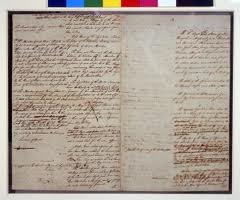
The end result, as James Madison's detailed notes make clear, was an amalgam of several proposals, hammered out through negotiation and compromise by men who knew that their failure likely meant the failure of the American democratic experiment.

But it wasn't perfect.

As with the Declaration of Independence, our forefathers who established a nation in the name of freedom, were unable to find a way through the tangled political thicket to end slavery and, perhaps worse, in fact enshrined it in the new Constitution by including the now infamous "three-fifths clause."

This allowed the states with legalized slavery to count those who were otherwise considered to be "property," to, in this once instance, be counted as at least partially people for the U.S. Census purposes of representation in Congress and the Electoral College.

In his book "Negro President," historian Garry Wills makes the compelling case that Jefferson and the  parade of Virginians who followed him into the presidency and House Speakership, benefited from this clause, which gave them representation in the House of Representatives and Electoral College disproportionate to their white populations.

(He also argues, with some apparent justification, that from that point forward, Jefferson's earlier and impassioned advocacy for eliminating slavery in the new republic  evaporated into mere rhetoric, as the full benefit of the political windfall the three-fifths clause provided made itself increasingly self-evident.)

But throughout the debate over the Constitution, one other central issue plagued the debates -- a Bill of Rights.

The American Civil Liberties Union sums it up pretty succinctly: "The Federalists opposed including a bill of rights on the ground that it was unnecessary. The Anti-Federalists, who were afraid of a strong centralized government, refused to support the Constitution without one."

The federalists argued that the Constitution clearly outlined the powers of the federal government and that all other powers fell, by default, to the states. They argued articulating a set of rights might make those not articulated unprotected.

But for those who feared centralized control, an assumption was not enough and it was equally important to outline what a central government could not do.

And so the Constitution was ratified at its convention with the promise that immediately after its adoption by ratifying conventions in all 13 states, that an equal effort would be made to draw up and adopt a Bill of Rights.

Drafted by Madison and based largely on George Mason's Virginia Declaration of Rights, these civil liberties have formed the foundation of some of our most treasured freedoms, as well as the foundation of some of our most vociferous arguments.

Those who argue in favor of gun rights, and those who argue to protect the right to burn the flag both revere the same document.

Only in America.

So take a moment today to consider what life might be like without those rights. It doesn't take much imagination.

Adams looks worried. He was, about his legacy.
And you don't have to look at despotic regimes in third-world countries to do it.

It has happened right here on our shores, most often in times of war, or near war, and often by those considered our greatest presidents.


Just seven years after the adoption of the Bill of Rights, they were challenged by the Alien and Sedition Acts, which made it a crime to speak ill of the administration of President John Adams for fear of fomenting a desire to go to war with France.

During the Civil War, Abraham Lincoln suspended the right of "habeus corpus," which allows a court to determine if a prisoner has been imprisoned lawfully.

During World War I, Congress passed and Woodrow Wilson signed The Sedition Act of 1918, which outlawed speech and the expression of opinion that cast the government or the war effort in a negative light or interfered with the sale of government bonds.

During World War II, this nation imprisoned thousands and thousands of Americans in west coast camps simply because they were of Japanese heritage.


And, as Jon Stewart archly noted (does he ever note anything any other way?), last week Barack Obama made clear he is considering vetoing the $662 billion defense authorization bill passed this afternoon, "not because he objects to the executive branch having near infinite power to detain whoever it wants, but because he objects to the executive branch not having totally infinite power to detain whoever it wants" without charging them.

It was not too long ago, 2007 in fact, when the same Barack Obama told an enthusiastic crowd of supporters "we're not a nation that locks people up without charging them."

All of which brings to mind of a quote from James Madison that I have taped to the very computer screen on which I am writing these words, and which I look at every day:

"I believe there are more instances of the abridgement of freedom of the people by gradual and silent encroachments of those in power, than by violent and sudden usurpations."

Happy Birthday Bill of Rights.

It would seem we need you more and more each day.