Showing posts with label Phoenixville School Board. Show all posts

Thursday, April 30, 2020

Phoenixville Hires Architect for New School Study

Image from screenshot
Monday's Phoenxiville School Board meeting was conducted online.


The school board pressed ahead Monday night with laying the groundwork for constructing a new elementary school.

The board hired Schrader Architects to undertake two projects for a total cost of $33,780.

The firm will conduct a feasibility study for construction of a new school at a cost of $19,512.

Board members Lori Broker, Ayisha Serno and David Golberg voted against the motion.

The feasibility study is likely a prelude to the construction of a new school on 29.5 acres at the intersection of Hares Hill Road and Route 724 in East Pikeland.

In November, the board voted to purchase the property for $3.5 million.

Photo by Evan Brandt
The 29.5-acre site purchased by the school district in November.
Eight years ago, the district's attempt to expand the existing East Pikeland Elementary School at 1191
Hares Hill Road was foiled by the township zoning board's refusal to grant the necessary variances after 17 months of hearings.

The school was closed in 2018 and is now for sale.

In a related matter, the board also voted to hire the Bellwoar Kelly law firm for consultation on an as-needed basis for real estate matters.

Schrader has an extensive history with Phoenixville schools, having worked on 15 projects over the past 10 years, including, most recently, the $40.8 million early learning center/Manovon Elementary School that opened in 2017.

According to a timeline presented to school officials on February, the feasibility study is scheduled to be complete by the end of July.

In opposing the move, Sereni argued doing this work during a time of extreme economic uncertainty is a bad move. However, her motion to delay the vote by a month failed.

"There are so many uncertainties. We currently have 26 million people unemployed. I'm all for moving forward, how much difference would it make if we waited a month?" she asked.

The firm will also undertake a district-wide "service life extension" study of all district facilities for $14,268.

Again Sereni objected.

"I don't have a problem with the firm, I have a problem with the timing of doing this now," she said.

The coronavirus-driven closure of school buildings "has put more of a focus on online learning and we may view resources in a very different way" in a short time," she said.

"This is exactly the time to do it," said Superintendent Alan Fegley, noting that the buildings are empty now and it will be easier for the consultants to look around without disrupting classes.

Board member Christopher Caltagirone said whatever the future holds, "the buildings will still need ongoing maintenance," adding that the last time such a study was done was 2013.

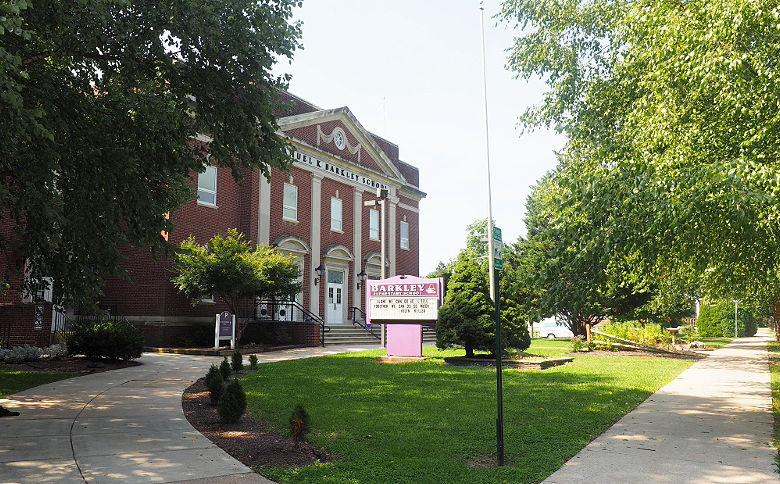
Barkley Improvements

In a matter related to maintenance of those buildings, the board voted to hire Bonfitto Inc. to replace the boilers at Barkley Elementary School at a cost not to exceed $110,000.

Sereni and Broker abstained from voting after a motion to discuss the matter in executive session failed to gather enough votes.

Another improvement at Barkley, the replacement of the concrete apron around the school, will be undertaken by S.J. Thomas co. Inc. at a cost not to exceed $53,575, will occur as the result of another vote Monday.

5 New Administrators

The school board also voted on new administrators and promotions Monday night.

The most significant of these, in light of the investigation of actions by Chris Gerhris, the previous business manager, was the hiring of a new one.

The board voted to approve a four-year contract with Jeremy Melber at an annual salary of $165,000.

Melber, who starts July 1, is currently the director of business services for the Southern Lehigh School District, where he has worked since 2011, according to his LinkedIn profile.

Prior to that, he served as business administrator for Northern Lehigh School District. Melber is a Penn State graduate and received his MBA from Kutztown University.

Another post filled was the promotion of Jessica Kilmetz, currently a curriculum supervisor with the district, to fill the vacant position of Director of Curriculum, a post she is to assume May 1. Her new salary will be $130,000.

Also on May 1, Rose Scioli will take on the position of assistant principal for scheduling at Phoenixville High School, replacing Khalid Sutton, who was promoted. Scioli will be paid an annual salary of $105,000, according to the meeting agenda.

After serving as the interim, Corinne Reutter was approved as assistant principal at Phoenixville High School effective May 1, at an annual salary of $95,000, replacing Darryl Perecko who resigned, according to the agenda listing.

Another promotion approved was for Donald Grinstead, head football coach, who was approved as director of student activities and athletics, a post he will take on July 1 at an annual salary of $90,000. He replaces Matt Gionta who resigned.

An Agenda Undone

The way the Phoenixville School Board operates is to hold a work session and discuss items that will be voted on at the following week's regular meeting. Thus is born the regular meeting's appropriately named "consent agenda."

Most of the items reported above were on Monday's "consent agenda," but board members Ayisha Sereni and Lori Broker pulled all but three of the items from the consent agenda so they could be further discussed at Monday's meeting. This is their privilege under the rules the board adopted.

Sereni said several times that she did this so that those watching the online meeting, myself included, would have a clearer understanding of what was being voted upon. A noble sentiment to be sure.

Expressions during Monday's Phoenixville School Board 
meeting varied from animated to frustrated.
But even normally routine matters devolved into circular discussions and arguments Monday, so much so that the agenda's big ticket item, a presentation on the proposed budget, had to be pulled so the board could participate in a scheduled closed-door executive session, presumably with lawyers being paid by the hour, and for which they were at least an hour late.

Discussion rambled on and board member Laura Reed, the boar's parlimentarian, repeatedly "called the question" to force a vote.

"I'm just trying to get through this agenda," Board President Blake Emmanuel could be heard to say more than once.

These delays so irritated teacher and audience member Kelly Goodwin that when it came time for public comment, she emailed her frustration to be read into the record.

"This was a two-hour meeting and the reason most of us were here was to hear the budget presentation, but instead we got two hours of arguing. Please be respectful of our time," Goodwin wrote.

At least 30 minutes of the meeting was devoted to Broker's explanation of why she could not complete the minutes from the previous meetings for voting Monday night.

Broker is the board secretary and she said the minutes taken by the district administration are rife with errors, which she finds by viewing the video recording of the meeting.

Broker, who moved her laptop computer at least two times during Monday night's meeting, said despite help from Sereni, she needs "adaptive software" to make it easier to complete the minutes.

At one point, board member David Golberg had to ask Broker to silence whomever was playing piano in her house in the background while she spoke. "It's very distracting," he said.

Another lengthy discussion resulted when Broker and Sereni objected to a motion to display the proposed budget. "This motion suggests we are moving with an early vote on the budget adoption and that is folly," said Broker.

"We have budget meetings on the calendar and we're already talking about advertising the budget. That is putting the cart before the horse," Broker said.

Both were eventually convinced that the vote is merely to empower the administration to display whatever preliminary budget is ultimately adopted.

"This is so we can advertise it when appropriate," said Superintendent Alan Fegley. "This is no different than we we do every year," said board member David Golberg.

Another lengthy discussion revolved around Sereni's refusal to submit the treasurer's report for
adoption due to an ongoing discussion about the financial relationship between the district and the Phoenixville Athletic Boosters.

School Board President Blake Emmanuel's frustration,
top right, with the length of Monday's meeting was evident.
As I understand it, and I readily admit I may not, the boosters rent some of the district's athletic facilities and Sereni has been unable to see their bank statements, something as treasurer she feels she should see given her responsibilities to submit a complete and accurate report.

"I'm deeply concerned," said Sereni, who at one point chided the other board members for "rolling their eyes" and various other reactions to her concerns.

Emmanuel said in fact the booster group was scheduled to appear before the board at Monday night's meeting to try to explain what's going on, but the social distancing requirements that disallow in-person meetings due to the coronavirus pandemic prevented that from happening.

Sereni even made a motion requiring that the boosters deposit their funds in district accounts, to which board member Christopher Caltagirone replied "to say you cannot complete your duties as treasurer because information is missing is not factually correct. It is not our account."

"But it's public money," Sereni replied.

"There's nothing underhanded going on, nothing is being hidden," said Golberg. "This whole discussion is completely circular and we're wasting time."

Perhaps no better description could be chosen for the board meeting.

Thursday, January 23, 2020

I'm No Longer Meeting You Halfway

Norman Rockwell's famed painting,
'Freedom of Speech' depicts that speech
happening at a town meeting.
Perhaps the most important, and least appealing aspect of municipal government is the much-maligned public meeting.

They are almost always in the evening, when all of the good TV shows are on, and it can be hard to navigate the language and procedures to get a feel for what's being accomplished -- or not accomplished.

And let's face it, people in the audience, and on the dias, have been known to drone on at public meetings.

That's where your local news sources comes in. We usually have a fair bit of experience in that department.

In my case, it's more than 30 years and, remember, I'm being paid to be there -- at least for now..

The public meeting is the place where elected officials, and the paid staff, interact with and are, to some extent, accountable to the people who elected them and pay their salaries.

The public meeting is where those things most likely to affect your life on a daily basis -- things like trash pick-up, water from the tap, your neighbor's noisy rooster -- can be taken up and addressed, not always to our satisfaction.

But knowing which meeting to attend, when your issue is going to come up, why a particular motion is important, can be a difficult needle to thread. After all, who wants to go to them all?

And all too often, important matters come up that were either not on the agenda, or whose importance was not clearly outlined on the agenda.

Traditionally, this is where local news has served a public purpose, paying folks like me to know what meeting is important, and to be there when the agenda looks boring but something vital comes up unexpectedly.

As I have written about here previously, and, some would argue, ad nauseum, that vital public service is being threatened by a variety of factors. Local newspapers are struggling and closing and the public they once served is less informed as a result.

That is true here in Pottstown as it is all across the country.

All of which brings me to today's point.

Thanks to government offices being closed Monday for Martin Luther King Jr. Day, Tuesday saw seven different meetings (that I know of) that should have been covered:
The Fifth Street home where an Airbnb is proposed.

  • The Pottstown Zoning Hearing Board heard testimony on a request to convert a large home on Fifth Street into an Airbnb, an application borough council opposed. I didn't go to that meeting, so I don't know yet what happened. And so, neither do most of you.
  • In the next room in borough hall, the Pottstown Borough Authority met and, according to the agenda, set the new water rates for 2020. An attachment to the agenda made it clear what they are and I have reported on it previously, but I didn't go to that meeting, so I don't know yet if anything else happened. And so, neither do most of you.
  • In Royersford, the Spring-Ford Area School Board met for a work session. One of the items was discussion of a $176 million preliminary budget for the coming school year. The board is scheduled to vote on adopting it at another meeting Monday night, during which two other municipal meetings that should be covered will take place (more on that later). I didn't go to the school board meeting Tuesday, so I don't know what was said. And so, neither do most of you.
  • In Limerick, the township supervisors met and their agenda included discussion of the construction of a new firehouse for the Linfield Fire Company. I didn't go that meeting either, so I don't know if anything happened. And so, neither do most of you.
  • The Douglass (Mont.) Township Supervisors also met Tuesday, but because they do not post their agenda online, I can't even tell you what I missed because I wasn't there. And so, neither do most of you know what happened either.
  • In Upper Pottsgrove, I've confirmed the Township Commissioners voted unanimously to advertise an ordinance to abolish the township planning commission and replace it with a planning committee. I wasn't there, so I won't have a report on that for a day or two. The final vote on whether to move ahead with it is scheduled for Feb. 3.
  • The meeting I did go to was the Phoenixville School Board, which, evidently, had a rocky start to its year. With several new board members, the video from the Jan. 13 meeting shows the board convening, heading immediately into closed-door executive session and coming out more than an hour later and immediately adjourning. Tuesday's meeting was a continuation of that meeting.

U.S. Rep. Chrissy Houlahan
Among the things discussed was the revelation that the Pennsylvania Department of Education has cited the district for disproportionately suspending students of color.

The picture is muddled and I am meeting with Superintendent Alan Fegleyy and Assistant Superintendent LeRoy Whitehead today at noon to get it sorted out before I report something incorrectly about a very important and sensitive subject.

Speaking of today, if you've read this far and you live in the 6th Congressional District, you may want to attend a meeting I will be covering. U.S. Rep. Chrissy Houlahan will be holding her 15th Town Hall meeting at the Colonial Theater on Bridge Street at 7 p.m.

As you may have read recently, in 2019, Houlahan held more town hall meetings than any other member of Pennsylvania's Congressional delegation, a report put together by CoverThis.com.

That means I will miss the Lower Pottsgrove Township Commissioners meeting tonight where the agenda indicates architects will present the latest plans for the new $8.2 million township building.

But, check out Joe Zlomek's Sanatoga Post news site. He will likely be there and have a report for you.

And when Monday rolls around, there are three meetings which should be covered. In addition to the previously mentioned Spring-Ford School Board's voting meeting, the North Coventry Township Supervisors will meet.

Last night, Chairman Jim Marks, who was at the regional planning meeting I was covering, revealed that two important officials, longtime Township Manager Kevin Hennessey and Police Chief Robert Schurr are both retiring, "so we're dealing with that."

An older version of the plan for New Hanover Town Center.
And perhaps most significantly, the New Hanover Township Supervisors and Planning Commission will conduct a joint meeting on the proposed massive New Hanover Town Center project, which includes shopping centers and more than 700 new homes.

That meeting will be held at the township recreation center, 2373 Hoffmansville Road, starting at 6:30 p.m., according to the legal notice published in The Mercury on Jan. 15.

"We're expecting a crowd," New Hanover Supervisor Kurt Zebrowsky said at last night's regional planning meeting. "It's going to be some meeting."

Don't worry, I'm not going to miss that one.

Wednesday, June 5, 2019

Phoenixville School Board Eyes Homework Limits


To "death and taxes," the only thing a weary student might add to the list of things that are sure in the world is "homework."

But unlike when you and I went to school, and any discussion of not doing it was a quick one, the entire practice of homework is being re-examined now, both nationally and in the Phoenixville Area School District.

And like the sleep study and decision to move to later start times which preceded it, the school board is approaching the question through an appointed committee which gave its recommendations last month.

The 60 pages of recommendations were reviewed by the full school board Tuesday night and generated an interesting and spirited discussion.

For example, the guidelines include suggestions like no more than 10 minutes of reading per day for kindergarten students, plus another 10 minutes of other assignments; up through 25 minutes of daily reading for fifth graders.

In middle school, it was recommended that 60 minutes of homework should be the limit for sixth graders and 90 minutes for seventh and eighth graders, with no assignments over fall, winter and spring breaks which should be "reserved for family."

No more than two hours of homework a night was recommended for high school students. In both high school and middle school levels, homework assigned over the weekend "shall be considered the equivalent of a one-night daily assignment," according to the guidelines.

The board members all agreed that the homework committee had done a good job, with many calling it "a step in the right direction," but they still had many questions.

For example, there was discussion about the amount of homework generated in Advance Placement (AP) classes, whether it was too much, whether students are aware of the workload if they sign up for too many AP classes.

There was discussion about using an on-line program to coordinate and complete homework, and board member Jeesely Soto questioned how students in Phoenixville who don't have online access could use it.

Board member David Golberg questioned about how teachers can coordinate their individual homework assignments so as not to exceed the guidelines laid out in the recommendations.

Board member Christopher Caltagirone observed that those recommendations are at odds with the purpose of the new start times and it would add up to losing sleep, the entire purpose of changing the start times.

"This is just unacceptable to me, to put this burden on third and fourth graders, given when they will be getting home," he said, adding the policy shows fifth graders having more homework than sixth graders. "This is kind of divorced from reality," Caltagirone said.

Board President Eric Daugherty said he worries about students having, in essence, an eight-hour work day. "Between school, activities and homework, we need to ask at what point are we crowding out important family time?" he said.

Board member Lisa Longo noted that with the eight-hour work day, adults are required to be given two 15-minute breaks, "and we're not even giving that to these students."

Noting that some of the homework he has seen his children doing, Daugherty said "it was not for mastery, they were just doing it because they had to. I feel like involved parents should be able to opt kids out and say you know what, this time would be better spent climbing trees."

Longo said she would like to see more input from the faculty.

The board also heard from student Leo Sereni, who suggested that "flexibile deadlines" for homework also be allowed.

Superintendent Alan Fegley explained that the vote the board will take next week is merely to "acknowledge" receiving the recommendations and that the administration will work on those guidelines over the summer and present a more refined product back to the school board in August.

Here are the Tweets from the meeting:

Friday, March 15, 2019

Barkley Has Most Lead Violations in Phoenxiville

Barkley Elementary School


The Phoenixville School District's buildings have a total of  291 faucets.

When the water that comes out of them was tested for lead 13 of them had a level over the federal minimum safety standard and 12 of those were at the district's oldest building -- Barkley Elementary School.

One was at Phoenixville Middle School.

All have been shut off while the district decides what to do about it.

Superintendent Alan Fegley said "we're actually very pleased with the results."

That's because most districts find that 10 to 30 percent of their faucets dispense water that has a lead level higher than 15 parts per billion. Phoenixville's percentage is about 4.5 percent.

Also less worrisome is the fact that the lead only shows up when the water has been left to sit for more than 12 hours and when the water has been run as little as 15 seconds, whatever  contamination remains drops below the safety level.

All of the contamination came from sinks, none from drinking fountains Fegley confirmed. And the sinks where the contamination was found "are really not used very much," said J. Kenneth Butera, who heads the school board's building and grounds committee.

He reported on the findings at last night's school board work session.

Fegley said the district's consultants said it is useless to try to find the pipe which is the source of the contamination and it is much more cost-effective to replace faucets, place filters there or, may well be the case, simply turn off faucets hardly anyone ever uses.

He said the testing was done at the suggestion of the state, which suggests annual testing or at least discussion of undertaking a regular testing regimen.

The last time the district tested its water for lead was in 2007 when the minimum safety standard was 20 parts per billion, Fegley said.

Full-Day Kindergarten


Test scores comparing all Phonenixville's kindergarten students
with those in the full-day pilot program.
The school board also discussed the district's pilot full-day kindergarten program and received an
abbreviated overview from Mwenyewe Dawan, the principal of the Phoenixville Early Education Center, which houses grades K-1.

She said comparing performance by those in the district's half-day kindergarten with those in full-day showed greater improvement from the full-day students.

Early learning center teachers speak in favor of
full day kindergarten in Phoenixville.
However, she confirmed what board member Christopher Caltagirone noted, that the sample-size of students being compared is too small to reach a statistical conclusion.

Caltagirone said he is nevertheless in favor of full-day kindergarten.

Board member Kevin Pattinson, who heads up the board's curriculum committee, said even if the district's sample size is too small, it mirrors national statistics on the benefits of full-day kindergarten.

"It has a cost, but it pays for itself in the long run," said Pattinson. "I wish I had pushed for it harder years ago when we could afford it more easily."

The board also heard from three teachers at the early education center who favor making kindergarten in Phoenixville a full-day affair. Given the $2.6 million shortfall in the 2019-2020 budget, and the fact that the district is moving its start times in the coming school year, makes adoption of full-day kindergarten at the same time unlikely Pattinson acknowledged.

"But if I could leave the board knowing we had implemented it this September, I would," he said.

Fines for Vaping?


A sharply divided board continued its discussion of the idea of fining students who are caught a second or third time vaping on school grounds.

Last month, the board could not reach consensus and sent the matter back to the policy committee, also headed by Pattisonson.

There did not seem to be much movement in the discussions Thursday night, although board member Jeesely Soto did provide some new information: that Phoenixville Mayor Peter J. Urscheler opposes fining students for the offenses.

Soto also said she spoke with members of the police department who told her they had not cited anyone for underage vaping in the past year and that the consensus among the department is fines would be a problem.

Fegley had told the board that students said fines would be a better deterrent and confirmed that most students caught the first time, who have their equipment confiscated and must complete an anti-smoking program, do not repeat the offense.

That makes the issue of fines unlikely and not a problem, said Butera. But Board Lisa Longo said the fines are punitive and, like cash bail, "punish the poor."

It's different than fining a student for a lost book, which the district also does, because that is to replace the item, not a direct punishment for behavior.

School Board President Eric Daugherty cut off discussion after a time and said the question will be decided at the voting meeting March 21.

And with that, here are the Tweets from the meeting:

Friday, February 15, 2019

Phoenixville Debates Fining Vaping Students

Phoenixville Schools Superintendent Alan Fegley says teen vaping is "a national epidemic."
The Phoenixville School Board held off on adopting a new policy to deal with teen smoking and vaping on campus Thursday with board members were sharply divided over whether fines should be imposed on the offenders.

Several board members, including Jeesely Soto, Lisa Longo and Lori Broker are against a proposed policy that would fine students $100 per offense after the first.

After the first offense, the draft policy change calls for the student to go to a workshop outlining the dangers of vaping.

Although the draft policy change applies to all tobacco, the increased use of e-cigarettes is of primary concern.

"It's a national epidemic," said Schools Superintendent Alan Fegley.

He's not wrong.

In December, Surgeon General Jerome Adams declared youth e-cigarette use an epidemic and the Food and Drug Administration plans to publish proposed new regulations next month aimed at curbing use by teens.

2018 tobacco use by teens according to the CDC.
Monday, the national Centers for Disease Control and Prevention released the results of its annual National Youth Tobacco Survey.

"Over the course of a year, the number of high school students using tobacco products, which include e-cigarettes, increased by about 38 percent," CNBC reported. "That translates to about 27 percent of high school teens using tobacco products in 2018," the CDC said.

"Of all the tobacco products the CDC surveys students about, only e-cigarettes saw a meaningful increase in use. Among high school students, e-cigarette use surged nearly 78 percent. In 2018, nearly 21 percent of high school students vaped, up from close to 12 percent in 2017," according to the CNBC report.

In 2018, 1.5 million more middle school and high school students vaped than in 2017, up to 3.6 million from 2.1 million, according to the survey.

"The skyrocketing growth of young people's e-cigarette use over the past year threatens to erase progress made in reducing youth tobacco use," CDC Director Robert Redfield said in a statement. "It's putting a new generation at risk for nicotine addiction."
"The bottom line is this: In the data sets we use, we have never seen any substance used by America's young people rise this rapidly," Health and Human Services Secretary Alex Azar said at a December news conference.

According to the Surgeon General's office, the nicotine in e-cigarettes and regular cigarettes is addictive.

"The aerosol from e-cigarettes is not harmless. It can contain harmful and potentially harmful chemicals, including nicotine; ultrafine particles that can be inhaled deep into the lungs; flavoring such diacetyl, a chemical linked to a serious lung disease; volatile organic compounds such as benzene, which is found in car exhaust; and heavy metals, such as nickel, tin, and lead," according to the Surgeon General.

"E-cigarette use among youth and young adults is strongly linked to the use of other tobacco products, such as regular cigarettes, cigars, hookah, and smokeless tobacco," according to the Surgeon General. "Some evidence suggests that e-cigarette use is linked to alcohol use and other substance use, such as marijuana. And certain e-cigarette products can be used to deliver other drugs like marijuana."

While none of the Phoenixville School Board members disagrees with the goal of the proposed policy, to discourage the use of tobacco and e-cigtarettes on school grounds, they could not agree on the best way to achieve that goal.

Fegley told the board that the students who have been caught vaping and attended the workshop have said the best way to discourage vaping is to take away their device and to fine them.

"I'm just telling you what they said would make them stop," said Fegley.

Most board members agreed that taking away the electronic device -- Juul is the most popular -- is effective and should be part of the policy being discussed during Thursday night's workshop meeting.

"Juul has dominated the e-cigarette market since launching in 2015. It now represents about 75 percent of the market, according to Nielsen data, with much of the growth coming over the past year," according to CNBC.
But board member Lisa Longo said the teens were merely suggesting a fine because "it's easier" than other penalties, like detention or being required to do community service. "They're laughing at us," she said.

Soto said she is worried that students from more well-off families would be able to afford the fines, while students from low-income families would be put on payment plans, have to work off the fine or even not receive their diploma due to unpaid fines.

That's the policy for other unpaid fines, currently levies for replacing a lost textbook, library book or library late fines, said Fegley.

"So we're saying if your family can buy you out of trouble, we're OK with that and if you can't afford it, come and paint a hallway," said Longo.

But School Board President Eric Daugherty and member Kevin Pattinson argued that the fine is no different than the other fines levied by the school district.

"First, life isn't equitable. There will always be those who struggle financially," said Pattinson, who chairs the policy committee that was recommending the passage of the changes.

He said "kids will laugh" at the idea of doing community service as punishment.
The increase in teen vaping has mirrored 
an increase in advertising, according to the CDC.

"I am in a building every day with high school students and what stops them is when you take the device," said Pattinson.

"Those with enough money will just go and get another one. If the fine falls on a family that can't afford it, the parent needs to sit the kid down and say 'what are you doing?'" Pattinson said.

"It's called parenting. Your kid will be mad at you, but you can't be your kids' friend.," Pattinson said.

"If a kid is going to be a repeat offender, this is the penalty," said Daugherty. "These are the consequences of those actions."

"What's next?" asked Longo. "Will we fine kids if they're late to school? Will we fine them for being in a fight?"

"We don't want to be collecting fines," said Fegley. "We want to stop the behavior."

As discussion dragged on, Soto made a motion to table the matter, thereby sending it back to the policy committee for more work, and that motion passed with a 4-3 vote.

And if you want to know what else happened at the board meeting, read the Tweets below: