Showing posts with label Montgomery County Planning Commission. Show all posts

Friday, April 5, 2019

Keeping Things Open in New Hanover Township

Photos by Evan Brandt


Township Supervisors approved the preservation of more than 33 acres of a beloved dairy farm and are poised to enjoy the preservation of another 455 acres of open space in the coming months.

The location of the Suloman Farm is marked by

the red circle in the lower left portion of the map.
The farm that was preserved is the Suloman Dairy Farm on Leidy Road between Swamp Pike and Buchert Road.

The retail dairy store, on about 1.16 acres, was not part of the preservation said Township Solicitor Andrew Bellwoar.

The remaining 33.4 acres will remain with the Suoman family, but a conservation easement costing $700,000 will ensure it remains a farm no matter who owns it.

"You can't buy better milk anywhere," said Planning Commission Chair Susan Smith in endorsing the move.

The money for the conservation easement comes from the .15 mill open space tax on earned income approved by voters in a townwide referendum in 2006, said Bellwoar.

The farm was identified in the township's Open Space and Recreation Master Plan as a property worthy of preservation and consists of a total of five parcels.

The second and larger open space effort underway concerns the Laughing Waters Girl Scout Camp, located south of Route 73 between New Hanover Square Road and Fagleysville Road.

Part of the property is in Upper Frederick Township, but the majority of the property is in New Hanover township, said Township Manager Jamie Gwynn.

Montgomery County has already agreed to put up $2,767,000 toward the $3,917,000 price of the conservation easement and another $1,150,000 grant is being sought from the Pennsylvania Department of Conservation and Natural Resources.

In cooperation with the Girl Scouts, Natural Lands and Montgomery County, DCNR Secretary Cindy Adams Dunn, will be hosting local state legislators and inviting the press to tour the camp on May 2 according to information provided by state officials.

The idea is to highlight the importance of the camp's preservation and promoting the Governor’s Restore PA initiative which would assist in helping to preserve large important conservation areas such as the camp, as well as many other essential infrastructure needs across the state. 

The township supervisors voted unanimously Thursday night to endorse the effort to preserve the camp from development.

Route 663 News


On the state grant front, Gwynn said the township has already received a $125,000 grant from PennDOT to install a signal at the intersection of Route 663 and Route 73, the western side of that dog-legged intersection.

A traffic control signal will be installed at the intersection of routes 73 and 663 next to Saldutti Car Corner. That hill will be reprofiled to increase sight distance and widened to put a left-turn lane facing west on Route 73 to turn onto Route 663 at that intersection.
The western intersection of Route 663 and Route 73 

where a traffic signal is planned.
But Thursday night he announced a second grant for $377,000 from the Commonwealth Finance Authority toward the same project. That's a total of $502,000 toward a project whose cost is currently estimated at $640,000, said Gwynn.

He thanks the township's traffic consultant Sandy Koza for writing the grant application. He said a third grant application is still pending for the remaining $138,000, although he warned that the project will probably end up costing more than the estimate as construction costs are rising.

Without the third grant, New Hanover will turn to the funds it has collected from developers for the impact their residential projects have on township roads.

More improvements are coming to the heavily traveled road. During the same meeting, Township Public Works Director Dennis Flynn told the supervisors that he has been contacted by PennDOT and they intend to repave one of two sections of Route 663 this summer.

They will wither repave the section from Swamp Pike Route to Route 73; or the section from Route 73 to Hill Road.

And with that, here are the Tweets from the meeting"

Thursday, February 28, 2019

Pottstown Regional Planners Urged to Join Others Aiming for 100% Renewable Energy Usage by 2050

Photos by Evan Brandt

This map shows communities across the country that have resolved to run on 100 percent renewable energy by 2050.


Not everything the Pottstown Metropolitan Area Regional Planning Committee deals with is zoning and traffic and land use.

Sometimes the planning part deals with more global subjects, like climate change, and how we can plan locally combat it.
Bill Sabey, left, and Jim Wylie.

Last night was one of those nights.

The planners were visited by two volunteers -- Jim Wylie and Bill Sabey -- from the Sierra Club's "Ready for 100%" renewable energy initiative.

They were there to talk to the planners about encouraging their municipalities to take whatever steps they can be convinced to take to change their energy habits -- that goes for the municipalities themselves as well as the residents they represent.

Montgomery County towns considering the resolution
If they do so, they would not be the first.

To date, the Chester County municipalities of Phoenixville, West Chester, Downingtown, Uwchlan, Kennett, and East Bradford have all adopted resolutions committing to 100 percent clean, renewable electricity by 2035, and 100 percent renewable energy for heat and transportation by 2050.

In Montgomery County Lansdale, Bridgeport, Conshohocken, Norristown and Plymouth are all considering similar resolutions, Sabey said.

Jon Lesher, principal environmental planner for the Montgomery County Planning Commission, told the regional planners that the county's renewable energy efforts have focused primarily on solar and geothermal, where it is viable.
Solar projects throughout Montgomery County.

There has not been much focus on wind energy here simply because, the last several days excepted, eastern Pennsylvania is not an area known for sustained regular winds.

He said to date, Montgomery County has 1,865 solar projects.

Moving forward with small achievable steps will make the goal of relying on 100 percent renewable energy possible, said Sabey.

In the first five years, small steps like making homes more energy efficient, conducting energy audits, researching grants and energy alternatives are all part of the plan, said Wylie.

The savings that can be generated by such changes can be used to as a nest
egg for future projects.

Pottstown Borough Council President Dan Weand noted that when the borough built its new $4 million public works garage, it was sure to put nodes on the roof to accept solar panels.

"But budget constraints made it too much to afford right away," he said.

Sabey said doing an energy audit on borough hall and other borough facilities could generate savings, "but don't put that in the general fund. Put it into a dedicated energy fund and when grants come along that need a 50 percent match, you'll be ready," he advised.

A study by the Delaware Valley Regional Planning Commission 

found the 8 towns in the Pottstown region spend $169.2 million
per year on energy.
The next step, after adopting a resolution, can be to set up a team of officials, experts and volunteers -- West Chester calls theirs the "Green Team" -- to start mapping out how the sustainable energy goals can be achieved.

For example, neighborhoods can band together and get a discount from a solar panel installer if they all commit to getting panels. Philadelphia recently bid for purchasing solar power electricity and awarded it to a project in Adams County for a price of 4.4 cents per kilowatt, Wylie said.

The Delaware Valley Regional Planning Commission estimates that the eight municipalities in the Pottstown planning region spend nearly $170 million per year on energy. "Imagine if even half of that could be from renewable sources," said Sabey.

About 91 percent of that energy comes from three sources, nuclear, coal and natural gas, with solar representing 1 percent and hydro-electric 3 percent.

The alternative, Sabey said, is to endure the ever-worsening impacts of climate change without taking any action to stem them.

We are already beginning to see the impacts, he said.

Record temperatures, with some models predicting more than 40 days a summer above 90 degrees, all of which will require more air conditioning, which will require more power.

Such high temperatures also lead to things like highways buckling, as Route 422 and route 202 did last summer.

There is also a decided increase in heavy downpours in the region. No you are not imagining it.

He pointed to the fact that last year, for the first time in its 38-year history, the King of Prussia Mall was flooded by an intense rain storm.

Government records indicate that intense downpours above normal variations from 1958 to 2012 increased in the northeast states, including Pennsylvania, West Virginia and Maryland, by 71 percent.

The planners made no commitments to speak with their municipalities about moving forward with any of the suggestions made by Wylie and Sabey.

And with that, here are the Tweets from the meeting:

Friday, November 30, 2018

Upper Pottsgrove Wins Montco Planning Award

Submitted photo
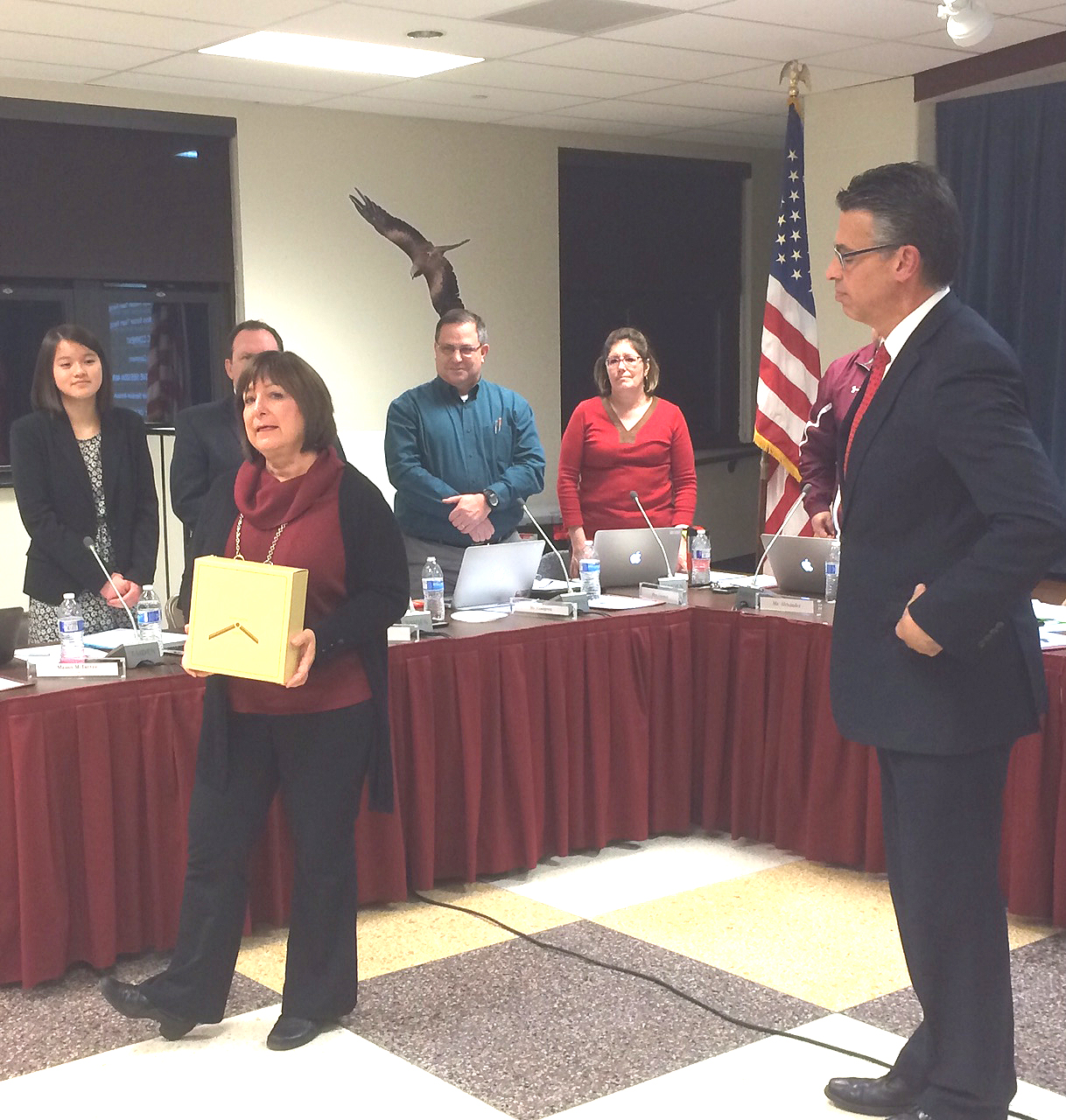
From left, Montgomery County Planning Commission Vice chairwoman Dulcie Flaharty, Planning Commissioner Director Jody Holton, Regional Recreation Coordinator Michael Lane, Michelle Reddick and Dennis Elliott, Vice Chairwoman and Chairman, respectively, of the Upper Pottsgrove Open Space and Recreation Board, board member and former township commissioner Herb Miller and State Rep. Marcy Toepel, R-147th Dist.


The Upper Pottsgrove Township Open Space and Recreation Board was recently named the 2018 winner of the Planning Advocate Award from the Montgomery County Planning Commission.

Given out every year since 1967, the Planning Advocate Award "recognizes an engaged citizen, appointed/elected official or board, or community organization that has made significant and sustained contributions to advancing or promoting planning in Montgomery County."

The volunteer group was "recognized for community vision, sustained commitment to conservation of natural resources, and successful open space preservation and trail development achievements. Over nearly three decades, the board has created an enviable record of accomplishments, furthering the vision and goals of the township," according to the announcement from the planning commission.
The open space and trail development achievements were funded by a .25 percent earned income tax approved by voters in 2006.

At the time voters approved the tax, only about 70 acres of township land was permanently protected as open space.

Today, Upper Pottsgrove has more than 400 acres of open space that's permanently protected — that's an addition of 330 acres and an increase of more 450 percent, according to township officials.

The group held a special town-wide meeting Sept. 27 to gather input on the writing of a new plan.

This annual awards program, which is in its 51st year, recognizes the best in planning, design, and advocacy in Montgomery County. It promotes awareness of outstanding design and innovative planning in our communities and acknowledges the high quality of work and commitment of communities, organizations, and professionals in contributing to these projects, according to the county website.

The award was one of six announced recently and all the more impressive when one considers how often the recipients of these awards are from the eastern portion of Montgomery County.

In fact, in the last 10 years, only six out of 57 winners have come from any part of Montgomery County west of Limerick, representing just 10.5 percent of award winners.

Pottstown has won three of those six awards in the last 10 years, with the other three going to Pennsburg, Upper Hanover and East Greenville.

Thursday, June 28, 2018

Getting Land Preservation Out Into the Open

Fuzzy Photos by Evan Brandt
Eric Jarrell, section chief of community planning for the Montgomery County Planning Commission, illustrates all the area of interest investigated in the draft Multi-Regional Greenways and Stewardship Study during the meeting Wednesday of the Pottstown Metropolitan Area Regional Planning Committee.


Perhaps the first and most important thing to remember about environmentally sensitive areas, greenways and the like, is that many of those acres are under private ownership.

As a result, there is only so much that governments and non-profit preservation agencies can do directly to ensure the protection and proper function of critical woodlands, wetlands, meadows and streams.

Now in its third year and in preliminary draft form, a study that looks at such properties in 26 municipalities over 195 square miles in western Montgomery and northern Chester counties, looks to maximize that protection at a minimum of cost.
This map shows public parks, preserved
farmland, conservation lands and even
'Main Street Greenways' in purple.

"We can't just buy every property of value," said Eric Jarrell, section chief for
community planning with the Montgomery County Planning Commission.

Jarrell was in Pottstown Wednesday to update the Pottstown Area Metropolitan Regional Planning Committee on the progress of the study since its introduction in November of 2015.

The massive undertaking, assisted by the non-profit preservation group Natural Lands and the Perkiomen Watershed Conservancy, will be in final form by the end of the year.

Not only will it contain "best practices" for specific habitats and landscape types out in the undeveloped area, but also specific ways to improve specific greenways in boroughs, villages and downtown areas, said Jarrell.

Such efforts will also help in stormwater management efforts, he said.

But it can't cover everything.

One improvement Jarrell said the study is
like to suggest, is to use vegetation to 
replace some of the "ocean of asphalt" that
surrounds the firehouse in Gilbertsville.
For example, the study group looked at 38 public parks, but there are about 300 that it didn't. So father than try to devise a specific plan for each park, it will outline the "best management practices" for areas near streams, called "riparian buffers," woodlands and the like.

And those practices will not just be for municipal or protected lands, but also those in private hands as well. Jarrell said when complete, owners of those properties believed to have important or sensitive natural features will be invited to learn how to better manage them for maximum natural benefit.

They won't be pushy, he said in response to a concern raised by New Hanover Supervisor Kurt Zebrowski. "I think we'll have our hands full just trying to meet the needs of those landowners who respond and want our help," Jarrell said.

A separate guide will be produced for the management and improvement of Main Street greenways, said Jarrell, as well as guidelines for mustering a force of volunteers who can properly undertake such tasks as plant trees and remove invasive species.

Hopefully, private landowners may be able to take advantage of such volunteer groups as well.

And with that, here are the Tweets from the meeting:

Thursday, May 24, 2018

Regional Recreation and Sustainability Planning


When I headed out to last night's Pottstown Metropolitan Area Regional Planning Committee meeting, I glanced at the agenda and figured the big story would be Sanatoga Green.

Yawn.

Boy was I wrong.

It was on the agenda, but there was not much to say. It has been tinkered with, but remains the same basic plan.

More interesting was the presentation by John Lesher, chief environmental planner for the Montgomery County Planning Commission, who talked about Pottstown's sustainability plan.

It's the only one in the state, to his knowledge anyway, that includes both a borough and a school district, so let's polish our buttons on that one.

One of the more interesting snippets to come out of Lesher's talk -- we covered the plan fairly extensively back in January when it was adopted -- was how much the environment in which we live affects our health.
Here is the graphic.

He showed a graphic from a study that showed how much more important environment, lifestyle and special factors determine our lifespans -- more than genetics or infectious agents.

We spend 90 percent of our health money on medical care, but it is only response for 10 to 20 percent of how long we live or how healthy we are.

Here's the sound bite, "zip codes are more important than genetic codes" in determining our lifespan and over health, he said. Meaning that effort put into things like making Pottstown a nicer place to live actually help us to live longer.

Along those lines, the regional planners took an important vote and agreed to once again be the umbrella organization for the Pottstown Area Regional Recreation Committee and, hopefully, the retaining of director Michael Lane.

Upper Pottsgrove Township Manager Carol Lewis outlined that Lane and his predecessor, Justin Keller, had collectively obtained about $300,000 for each of the six towns that participate in in paying for his services.

Each town currently pays about $5,000, this due to a $100,000 grant from the state which expires next year, and a matching grant from the Pottstown Area Health and Wellness Foundation.

Next year, without the state grant, the price may rise to about $8,000 unless New Hanover and East Coventry -- the two towns which do not participate -- decide to jump into the pool with the other towns.

"Pottstown has definitely benefited from this," said Councilman Ryan Procsal.

The planners voted unanimously to continue to be the umbrella organization. Lewis said the recreation committee will make presentations over the next few months to the boards of the participating municipalities -- and the non-participating ones if they want to consider it -- to get their approval for the funding.

And now, here are the Tweets from the meeting:

Thursday, March 1, 2018

Greenways and Traffic, Both Are Being Studied

Photo by Evan Brandt
A map of the region being covered in the Multi-Regional Greenway and Stewardship Study. It includes municipalities in the Pottstown Regional Planning Group, the Upper Perkiomen Regional Planning Group, the Central Perkiomen Regional Planning Group and the Indian Valley Regional Planning Group, 36 municipalities total


It takes a long time to study and categorize features in 36 different municipalities.

Especially when you are looking at different terrains, habitats, flora and fauna, as well as coming up with ways to best maintain them.

But that's what Natural Lands and the Montgomery County Planning Commission are doing in an effort that is now three years old, and still not complete.

The idea is to get an inventory of greenspaces in the four regions, public and private, and come up with guidelines on how best to maintain them.

The Pottstown regional planners got an update on that effort last night, and learned that the park in each township and borough studied were carefully selected for habitat, landscape and terrain type -- wetland, meadow, forest -- so that the stewardship guides would apply to any parcel of greenspace with similar characteristics.

The planners also reviewed a list of 21 roadways or intersections which are candidates for study by the Delaware Valley Regional Planning Commission, removing some, adding others.

Here are the Tweets from the meeting:


Tuesday, February 13, 2018

Pottstown Takes Expensive Step for Redevelopment

Pottstown Plating is located at the intersection of Industrial Highway

and South Washington St.
Rebuilding and redeveloping an old industrial town involves tough choices.

When an industrial company goes under, it means it has no money to pay employees, or for anything else -- particularly an expensive environmental clean-up.

So it's little surprise that when Pottstown Plating finally went belly up more than 10 years ago, it not only wasn't paying its taxes, or its water and sewer bills, there's no way it was paying to clean up the mess decades of plating operations had left behind at the South Washington Street facility.

As the unpaid taxes and fees build up, the potential for someone to come along and take on not only the liability for the environmental clean-up, but also the financial liability of the ever-escalating fees and taxes, dwindles.

Usually, to unlock this Gordian Knot, something has to give. Monday night, borough council indicated its willingness to not so much give, as forgive.

Even though Interim Borough Manager Justin Keller would not reveal the identity of the developer who is interested, brought through PAID Executive Editor Peggy Lee-Clark, council willingly voted unanimously to forgive more than $225,000 worth of unpaid taxes and water/sewer bills.

That's because they know that it may be the only way that property starts generating tax revenue again, and without that forgiveness, the numbers of uncollected taxes, funds and fines will keep growing with little hope of ever collecting it -- little more than numbers on a page.

The money is already written off, and so is not revenue expected for this year's budget. The mystery developers will still need to convince the school board to forgive another $308,000 that the property owes the school district to move forward.

Keller said that will be on Thursday's school board meeting agenda.

Before the forgiveness becomes final, the developers must present -- and council must approve -- a business plan for the property

Keller, noting that the developer has plans to invest $2 million into the property to get it back onto the tax rolls, said "quite frankly we're lucky to have a developer take on these risks and expenses,"

Apparently, council agreed. 

Tuesday, January 23, 2018

Joint Meeting Highlights Pottstown Progress


Pottstown Borough and School District highlighted working together by meeting together Monday night.

First, the school board had to hold their first meeting of the year, but even with a closed-door executive session, that only took about 30 minutes.

Then it was on to the joint meeting which, unlike most previous meetings, had most members of most boards there.

The nine-member school board was only missing two, and the seven-member borough council was only missing one.

The agenda included the long-discussed but never adopted borough sustainability plan -- three years in the making. In fact, they've been working on it so long, it even has its own logo.

But guess what folks, last night, it got adopted! By both boards! Progess!

The school board adopted it unanimously but borough council had two no votes, one from Dennis Arms and one from Rita Paez.

Arms said he worries about the grant-funded projects the plan envisions which then must be sustained, costing more tax money. Paez did not give a reason.

Then the group heard about a plan conceived of by former school board member Tom Hylton and taken up by the Pottstown Rotary Club, which is celebrating its 100th anniversary.

To do so, the group, which has 100 members, plans on planting 100 trees and they are going to do it in a tree nursery that will be established behind Pottstown High School.

After five years in the ground, they can be used in parks, as street trees or on school properties.

Interim Borough Manager Justin Keller outlined the borough's new land bank ordinance and made a pitch for the school board to sign an intermunicipal agreement through which school taxes and liens will be forgiven on properties going into the land bank.

The school board seemed inclined to agree, although the details still need to be worked out and a vote taken.

There was also an update from Keller about the Walk/Bike Pottstown project, expected to wrap up this spring.

And now, without further ado, here are the Tweets:


Thursday, June 29, 2017

'Adaptive Re-Use:" Everything Old is New Again

This fire station in Norristown found a new life as
the Five Saints Distillery.
The name of today's discussion is "adaptive re-use."

As the name suggests, the idea is to take beautiful old buildings that populate the streets of storied communities like Pottstown, and find a new use for them.

Although we all know and love the outsides, sometimes the interiors need a little work, both to undo damage by well-meaning renovators, and to upgrade electric and plumbing systems to meet the needs of today's high-energy use uses.

Susan Richardson from the Montgomery County Planning Commission was in Pottstown Wednesday to talk to regional planners about how to make it easier for those projects to come to fruition.

Of course, they come in all shapes, sizes, personalities and avenues, but there are some basic things municipal officials can do to smooth the road of what is often a bumpy path.

Be flexible, change zoning to allow for such uses and bring them before elected bodies as conditional uses rather than the all-too-often more stringent
Although the developer agreed to preserve the school, the
borough agreed to an additional 28 single-family homes
on the 11-acre property to make the project 
economically viable.
requirements of a zoning variance.

One of the projects highlighted was the transformation of the former Perkiomen Valley Middle School in Trappe into apartments.

Richardson said the officials looked hard to find the right developer and had to make concessions to ensure the project would be economically feasible.

Of course, none of this is new to Pottstown, where several adaptive re-use projects -- the latest of which is the Beech Street Factory project -- have found success.

Consider the First Fidelity building, now home to The Brickhouse; the former Jefferson School, now senior apartments; the former borough hall on King Street, now apartments and even the armory next door, now used as a gymnasium and work-out area.

It takes vision, adaptive thinking and a flexible local government.

Now, here are the Tweets.


Thursday, May 25, 2017

Home Prices in Montco Are on the Rise


How much is your house worth?

That is a question every homeowner ultimately asks, only to find it answered when it goes onto the market.

But how much is everybody's house worth? Well, counter-intuitively, that is something that can be answered with greater certainty. At least if you are the Montgomery County Planning Commission.

Their annual report on the cost of housing was released recently and reviewed Wednesday night by the Pottstown Metropolitan Area Regional Planning Committee.

The short answer is -- "more."

According to Montgomery County planner Donna Fabry, the median sale price in the county rose by $8,150 in the last year -- an increase of about 3 percent.

Its the fifth increase in the last nine years, according to the study.

Market rate sales increased and reached its highest total since 2007 with 11,441 units sold and the median sale price being $278,500, according to county figures.

The median price for a new detached single home in Montgomery County increased by 11 percent to $499,990 and the median price on all new units of all types averaged out to $448,524 in 2016, a 14 percent rise over 2015, the report said.

This was due to more detached homes being built and single family attached home prices decreased by 3.9 percent to $336,875.

Among Bucks, Chester, Delaware and Montgomery Counties, Montco home prices increased the most in absolute dollars, while Delaware County homes increased by a higher percentage.

Within Montgomery County, New Hanover Township homes had the highest prices between $309,000 to 409,000, similar to Upper and Lower Providence, Collegeville, Skippack and Marlborough.

Pottstown, Lower Pottsgrove and West Pottsgrove had the lowest prices, ranging between $111,659 and $198,450. Upper Pottsgrove, Douglass and Limerick had slightly higher prices, ranging between $213,348 and $299,500.

Homeownership demand in the county has decreased, due to the increasing popularity of rental units "as many young people struggle to save money in the face of student debt, stagnant wages and the rising cost of living," according to the report.

The millenial generation is expected to turn to homeownership later in life than their parents did. The multi-family housing unit market has also turned away from townhouse toward luxury apartments "with amenities such as clubhouses, pools and dog runs," according to the report.

As a result, rents are being driven higher, with a 15 percent increase in Montgomery County from 2010 to 2015. The median rent rose from $1,057 per month to $1,214.

By contrast, the median home price over the same period rose by only 2 percent in Montgomery County, from $265,000 to $270,350.

"The demand for walkable town centers and mature suburbs with distinct neighborhoods served by multiple modes of transportation is expected to continue increasing," according to the report.

"In 2016, boroughs like Jenkintown, Ambler and Rockledge saw some of the highest percentage median price gains in the county," the report said.

Montgomery County Planner John Cover said "that trend bodes well for Pottstown," although he also acknowledged that "people move for jobs and schools with a good reputation," two areas where Pottstown does not often rise to the top of the list.

Many communities "saw growth not only in construction of new units, but in housing turnover. The increase in housing turnover is partially due demographic in nature due to the generational transfer of housing from baby boomers to millenials," according to the report.

Not much else of interest at the planning meeting. What was interesting can be found in the Tweets below.

Friday, January 13, 2017

Crowd Balks at Swamp Creek Trail/Greenway Plan

Photos by Evan Brandt
One of many speakers at last night's public meeting on the possibility of creating a Swamp Creek Greenway and trail from Schwenksville to New Hanover Square Road suggests Sunrise Mill should be restored before any thought is given to building a trail.


The meeting room of the Lower Frederick Township building was a tough place to be Thursday night if you were facing the crowd.

A presentation on the kick-off of a feasibility study looking at the creation of a Greenway and Trail in the Swamp Creek Valley, stretching across 5,000 acres from Schwenksville to New Hanover, drew a capacity crowd to the Lower Frederick Township building Thursday night.

Michael Stokes, assistant director of the Montgomery County
Planning Commission outlines the plans so far.
Not too many of them were there to support the idea of a trail, if the comments were any indication.

Michael Stokes, assistant director of the Montgomery County Planning Commission, doggedly tried to field questions and comments as residents spoke over him, and each other, in their effort to express their skepticism about and outright opposition to the project.

Many said the stream, which empties into Perkiomen Creek less than a half-mile from the township building, the surrounding woods and the wildlife that lives there would be best preserved by leaving it alone.

"There's a conflict between conservation and preservation when you say you want to bust a trail through it all," said Jim Rupert, a 15-year resident of the stream bank and one of the few speakers who took the time to give his name.

He said he has seen quite a bit of wildlife along the creek and those animals are "very sensitive to human activity. It's 100 percent untrue to say putting a trail through there would not be affected."

A resident of Delphi Road says it would be dangerous to put a 
trail along the curved street where there are many accidents.
Others said Montgomery County has enough trails, while many others questioned what their property rights are and whether the county would be taking any of it.

"I won't lie to you, government has the right to take your property for a public purpose, but that is not our intent," Stokes said.

The intent of the meeting was to get input from the community and to outline some very early concepts for what the county is considering. He added that the county already owns about 60 percent of the property that would comprise the greenway and host the trail.

Since 1971, Montgomery County has owned the Sunrise Mill property and it is a key element in the greenway and trail plan.

A photo of Sunrise Mill was used as the first slide in the presentation.
Not currently open to the public, it was built in 1767 and is structurally sound, but it has not been restored inside, said Stokes.

Several speakers suggested public money would be better spent restoring the mill and opening it to the public, rather than conceiving of a trail that is designed to bring people to a historic building they cannot tour.

"You're doing it backwards," said one speaker.

There were a few who spoke favorably about the idea.

One Limerick resident said she uses the Perkiomen Trail regularly and that 77 percent of Montgomery County residents polled view trails favorably, although it seemed evident not too many of those poll-takers were in the room Thursday.

Geoff Creary, from the landscape architecture firm
Simone Collins, 
listens to input from a resident about
the map showing the 
proposed Swamp Creek Greenway
prior to the start of Thursday night's meeting.
Dulcie Flaharty, a member of the Montgomery Planning Commission Board, employee of Natural Lands Trust and longtime open space advocate in the county, said fears about eminent domain are common when a trail is first-proposed.

"Look at where we've done trails already," she said, noting that all but a few of the 200 private property purchases necessary to create the Perkiomen Trail were negotiated sales, and only one lawsuit.

But that did little to convince the crowds and at one point, a voice int he crowd said "it's theft of private property."

Finally, one resident asked Stokes pointedly, if the majority of residents speak out against it, "what are the chances really, that it won't happen?"

"That's why we're here," Stokes replied.

Subsequent public meetings are planned for March and June.

Here are the Tweets as they happened during the meeting.

Monday, November 28, 2016

Community College Hub Wins Sustainability Award

The sustainability and Innovation Hub of Montgomery County Community College was awarded the Montgomery County Planning Commission's 2016 Montgomery County Award for Sustainable Design.


Blogger's Note: The following was provided by the Montgomery County Planning Commission.

The Sustainability and Innovation Hub of Montgomery  County Community College (MCCC), located in Pottstown  Borough, received a 2016 Montgomery Award for sustainable design, successful restoration, vision, and collaborative efforts. 

This unique adaptive reuse project transformed a former PECO energy substation and brownfield site into a state-of-the-art center for education, innovation, and conservation.

History

Pottstown Borough has always had a redevelopment vision for its riverfront. 

Located in Riverfront Park, this building was once a PECO sub-station.
Located adjacent to the borough’s 30-acre Riverfront Park and the Schuylkill River Trail, this property has long been a focus for revitalization and is highlighted in Pottstown’s redevelopment plan and the 2003 Riverfront and Memorial Parks Master Plan. 

This former three-acre brownfield site contained a PECO energy substation, built in 1911, which remained vacant for much of the 1990s until it was purchased by the borough in 1997. 

The borough began renovations to convert the north side of the building into offices with the assistance of state, county, and local governments and the Montgomery County Lands Trust. 

The Schuylkill River Heritage Area (SRHA) relocated its offices to the site in 2002. 

In 2007, the MCCC took ownership and began planning for the rehabilitation of the property and expansion of its west campus.

Design

Phase I

MCCC developed the site in three phases. Phase I began in 2010 with the construction of a 202-space green parking lot. 

The parking lot is designed to retain storm water.
The development involved site remediation and the installation of a rainwater collection system that prevents contaminants from leaching into the groundwater. 

The innovative design of this green parking lot utilized bioretention and involved the planting of over 130 native trees, shrubs, and perennials, providing an attractive and well-shaded parking area. LED lighting was also installed throughout the parking lot using an EPA grant. 

The Hub's green roof.
This well-designed parking lot, which is shared with visitors to the adjacent Riverfront Park and Schuylkill River Trail, was a major element in the transformation of the property. 

Phase II

Completed in January 2012, Phase II involved the removal of mold, lead, and asbestos from the building and the demolition and remediation of the building’s south side. 

The old roof was replaced with an eco-friendly green roof, a new entrance and handicap-accessible ramp were constructed, energy-efficient windows were installed, and water and sewer services were
updated. 
The turbines generate enough electricity to run the LED lights in the lot.
Between Phases II and III, MCCC installed four wind turbines on the property. 

The turbines produce a collective 4,000 watts of energy—enough to power the LED lighting throughout the parking lot. The turbines were designed as a demonstration project to teach students and the community about energy production.

Phase III

The final phase was completed in March 2016 and involved the construction of the Sustainability and Innovation Hub in the building’s south side. 

The hub enables MCCC to bring specialized education and workforce training to the Pottstown area. 

The aquaponics/hydroponics lab. 
The first floor features an innovative Aquaponics/Hydroponics teaching laboratory, which supports the interdisciplinary environmental studies program. 

The second floor is the Engineering Design Center, which supports the engineering technology program, bringing the degree to Pottstown for the first time. 

The third floor provides flexible innovation space for mentorship, learning, and collaboration.
The grand opening of the hub took place on April 18, 2016.

Collaboration

This project is a result of extensive collaboration involving years of planning and successful partnerships with many private and public organizations including Pottstown Borough, the Montgomery County Community College, and the Schuylkill River Heritage Area. 

The engineering lab
The college partnered with the SRHA to develop the River of Revolutions Interpretive Center, which
serves as a visitor center for the Schuylkill River region and focuses on the history of the river. 

Many partners worked together to create the Pottstown RiverWalk, a 1-mile scenic trail located in Riverfront Park that meanders through the woods and along the banks of the Manatawny Creek and connects to the Schuylkill River Trail. 

It features a series of interpretive signs highlighting the ecosystem surrounding the river.

The Sustainability and Innovation Hub is an outstanding example of how vision, creative planning and design, and collaboration brought exciting new life to an existing building and created an asset for the college and community. 

The hub, an innovative and collaborative space, offers opportunities for faculty, students, and the community to learn, share information, and work together to create a healthy and sustainable environment.

Tuesday, November 22, 2016

Douglass Settles Suits With Former Supervisor


A two-and-a-half year legal dispute between the township supervisors and a former supervisor is winding down.

Verdict? Nobody wins.

Except the lawyers. They always get paid.

Monday night, Anthony Sherr, a lawyer for the township's insurance carrier, outlined a settlement of the legal battle between Douglass and former supervisor Fred Thiel.

The supervisors sued Thiel in June of 2014, seeking nearly $37,000 in damages for the debacle of Mountain Mulch and Thiel's alleged granting of permission for the former composting operation to take debris from Superstorm Sandy.

The mulching operation and Thiel are both gone, but the lawsuits lingered.

Not one to take a challenge lying down, Thiel countersued later the same month, seeking $100,000 in damages and revealing that, former township solicitor Paul Bauer had forced him from office and tried to prevent him from ever running again.

Then, as happens with these things, there were depositions, hearings, motions, and before you know it, two years have passed, everyone is sick of it and no one but the lawyers have any money any more.

So what we know so far is that the township's insurance company will pay $18,000 of Thiel's legal fees and the township itself will pay its deductible of $2,500, said Township Manager Peter Hiryak.

Sherr also said that the settlement includes language indicating Thiel's suit was "without merit."

Although the supervisors voted unanimously for the settlement, it is not a public document until the settlement is "executed," said Township Solicitor Robert Brant.

So until that happens, we won't have any further details.

"When a settlement happens, often, not everyone is happy," said Brant. "But the supervisors are cognizant of spending the people's money and they have decided its in the best interests of the township," he said.

And now, here are the Tweets and videos from the rest of the meeting...

Wednesday, November 16, 2016

Pottsgrove Wants New Look at Enrollment Numbers

Photo by Evan Brandt
Nancy Miller, a district nurse since 1984, who has
worked in every Pottsgrove building, is recognized
on her retirement.
Among the decisions the Pottsgrove School Board made last night was to spend a little extra money to ensure objectivity.

The vote was on hiring a firm to conduct a 10-year enrollment study.

The matter has taken on a new urgency with the proposal to add more than 500 residential units in Lower Pottsgrove in the Sanatoga Green Development.

Also pending, and closer to approval but getting far fewer headlines, is the 178-unit Spring Valley Farms project.

School officials recently met with township commissioners and told them nearly all the school buildings are at capacity and too many students would cause costs -- and taxes -- to rise.

Projections by the developers indicate only 58 children would be added to the school district from the 503 dwelling units, comprised of 171 studio and one-bedroom apartments; 172 two-bedroom apartments and 160 three-bedroom townhomes.

School officials have their doubts about those projects and the fact that they were recently confirmed by the Montgomery County Planning Commission has caused the school board to look to another vendor to conduct its enrollment projection study.

The planning commission was the low-bidder at $7,350, but several school board members expressed concern about the county's involvement with the project.

Both School Board President Rick Rabinowitz and board members Jim Lapic and Al Leach said they had a concern about the county's objectivity.

"The county have a vested interest in the project," Rabinowitz said. "They get more tax revenue but don't have to shoulder any of the costs."

Instead, the board voted unanimously to spend more money, and hire a firm called Futurethink for $9,500.

Business Manager David Nester, who told the board he too had shared their concerns but was re-assured by the county that the planning commission could be objective, said Futurethink has done work for the district before.

"They do fine work," he said, adding that the firm should be able to put together some projects only six weeks after getting the figures, whereas the county would not have results until spring.

The board also recognized a long-time school nurse, the Falcons PIAA District 1 football champions as well as the high school boys soccer team for making it to the district final, losing by one point.

The board also pledged not to raise taxes above 3.3 percent, giving it more time to put together the 2017-2018 budget.

And finally, the board also voted to move $1.5 million of a $2.3 million surplus from the 2015-2016 fiscal year into the capital reserve fund to pay for future work on district buildings and facilities.

Now, here are the Tweets from the meeting:

Thursday, October 27, 2016

Greenway Study Plan May Be Complete in 2017

Photo by Evan Brandt
Montgomery County Planner Donna Fabry with the regional planning
award presented to the Pottstown Metropolitan Regional Planning
Committee recently by the TriCounty Area Chamber of Commerce.
What's the best way to manage the stream that runs through your property?

Should a township mow a field all summer or let it turn into a natural meadow if its now being used?

Can planting more street trees help reduce stormwater runoff in developed areas and reduce the need for costly storm sewer upgrades?

Its questions like these that may soon have an answer in our little corner of Southeast PA.

Well, not so little actually.

The largest greenway stewardship study ever funded by the Pennnsylvania Department of Conservation and Natural Resources is currently under way in 26 different municipalities in Montgomery and Chester counties.

Undertaken by a partnership between the Montgomery County Planning Commission and the Natural Lands Trust, the greenway stewardship study is looking at more than 4,000 properties in four adjoining regional planning commissions -- the Pottstown Metropolitan Area Regional Planning Committee and those in the Upper Perkiomen Valley, Central Perkiomen Valley and Indian Valley.

Overlay map shows different landscapes that
are part of the Greenway study.
Already a year old, the massive undertaking aims to inventory all parcels over 10 acres, identify the type of one of 10-landscapes it represents and to develop best management practices for the owners, whether private or public.

The data gather phase will be competed by the end of this year or the beginning of the next, said Montgomery County Planner Eric Jarrell.

Then the plan will be written at the same time the Natural Lands Trust, which is helping gather the data and assess the properties, will be writing a guide for the best ways to manage your fields, streams, forests and urban greenways.

Representatives from each of the four regional planning groups will then be tasked with helping the outreach effort to provide education and information to those property owners to help them make ecologically helpful decisions about how they manage their property.

The other item of interest which occurred during the regional planning meeting was discussion of major projects in Lower Pottsgrove, most notably Sanatoga Green.

Tom Troutman, the township's representative, questioned whether large projects such as these comply with the regional comprehensive plan.

Montgomery County Donna Fabry said that when Lower Pottsgrove changed the zoning that made Sanatoga Green possible, it was not in keeping with the regional comprehensive plan, but that the planners have no authority to stop it.

Here are the Tweets from the meeting:

Thursday, September 29, 2016

Big Projects Stir Traffic Concerns Among Planners

Photos by Evan Brandt
The Zern Tract, pictured here, calls for 240 town-homes on 28.5 acres split by Minister Creek
Two large development projects near major highways, one in Douglass (Mont.) and the other in Lower Pottsgrove, drew concern from planners Wednesday night.

The projects in question are the long-discussed "Zern's Tract" off Jackson Street in Douglass; and Sanatoga Green off Evergreen Road in Lower Pottsgrove.

Both projects were reviewed by the Pottstown Metropolitan Area Regional Planning Committee Wednesday and the same concern was raised about both -- traffic.

The Zern's Tract, so named because it includes Zern's Market along Philadelphia Avenue in Gilbertsville, is being developed by the Danny Jake Corp. and calls for 240 closely packed townhomes on 28.5 acres off Jackson Road.

The project includes 7.4 acres of open space along both sides of Minister Creek, but the primary concern is access. At some point in the future, the project would have access not only to Jackson Ropad, but also to a new $8 million to $10 million road called Market Street that is planned for the other side.

But a letter the planners intend to send to the township will suggest the development not be allowed until Market Street is built, even though it is not on property Danny Jake controls.

Sanatoga Green site plan.
Planners also raised concern about the lack of street trees, saying it will detract from the value of the
homes and make the project look "stark."

In Lower Pottsgrove, the massive Sanatoga Green project -- 159 town homes; 342 apartments in 17 buildings, as well as a hotel and medical office on 52 acres off Evergreen Road -- also has potential to create traffic headaches with only access off only road.

That road also carries most traffic off Route 422 to the Philadelphia Premium Outlets in neighboring Limerick.

The Sanatoga interchange off Route 422 will need to be upgraded before the project can break ground, but a joint PennDOT grant to Limerick and Lower Pottsgrove has made that project all the more likely.

There again, planners voted to send a letter outlining concerns about traffic.

 Here are the Tweets from the meeting...