Showing posts with label Lower Pottsgrove. Show all posts

Thursday, September 26, 2019

Planners Talk Houses, Hotels and Traffic Studies

Photos by Evan Brandt
A look at the plan for 143 age-restricted homes proposed for 36 acres in Upper Pottsgrove off Kummerer Road.


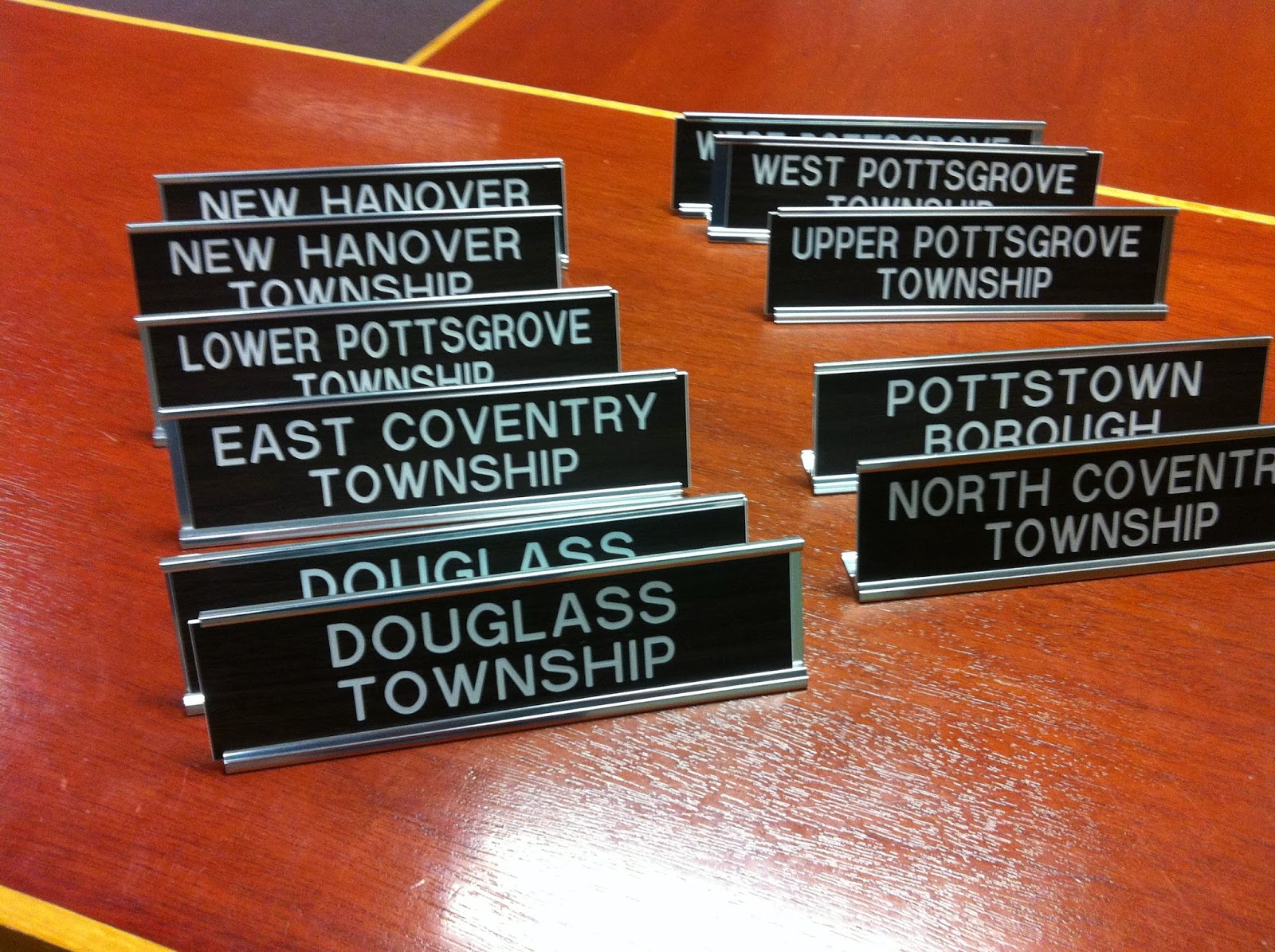
Two major developments in the Pottsgrove School District, traffic studies on High Street and Gilbertsville and a surprise $70 million proposal in North Coventry were all fair game during last night's regional planning meeting.

That's what can happen when you put eight different municipalities in the same room, stuff happens.

We'll begin as they did, with the newest.

Age-Restricted Homes in Upper Pottsgrove

Located in between Farmington Avenue, Route 100 and Pine Ford and Kummerer roads, the "Kummerer Tract" is the 36-acre site of a proposed age-restricted development of 143 detached, one-story single family homes of 5,000 square feet.

The project is within the expansion area for the township's sewer system, said Township Commissioner Elwood Taylor who remains, for the moment, the chairman of the Upper Pottsgrove Planning Commission.
A Google Earth view of the Kummerer tract bounded by Pine Ford
Road in the south, Kummerer Road to the west, Farmington 
Avenue to the north and Route 100 to the east.

The project "is part of the township's long-term plan to provide tax revenue for the township and the school district without stressing services," he said.

The age restriction is likely to ensure few if any of the homes house students the school district must educate. In fact, said Taylor, once all phases of the project are completed, it is estimated it will generate $1.8 million in annual tax revenue for the school district.

With easy access to Route 100, the project will also have a smaller impact on local roads than those further from the main north/south road in the township, Taylor said.

Developer Bo Erixxon said the project will board "50 percent more open space than is required," as well as "multiple access points," some of which will align with the Summer's Grove neighborhood.

The homes will be one-story except for those where the property grade makes it practical to have walk-out basements, he said.

The project will feature a community center, trails and a community pool, he said.

Taylor said a historical homestead for which the tract is named will be preserved with the help of the developer.

It is also consistent with the type of project envisioned in the "secondary growth area of the regional comprehensive plan," said Taylor.

Sanatoga Green Changes

In the works for years, this massive mixed-use development has gone through some changes since it first got underway with a zoning change in 2014.

The $146 million project is a mix of office, townhome and apartment buildings located on 57 acres
The latest version of the Sanatoga Green plan shows 147 
townhomes on the left, 310 apartments in the center
and the medical office space on the right.
off Evergreen Road opposite the Costco and Limerick outlets.

The township commissioners have granted preliminary approved the first of three phases, the construction of 147 townhomes.

But there have been changes, including a reduction of housing units from a high of 490 to 457, achieved entirely by a 35-unit reduction in the number of apartments.

In addition to reducing the number from 343 to 310, the developers have also reduced the number of buildings in which those apartments will be located from 17 to five.

Another change is the removal of a planned 108-room hotel, which was to be built in the second phase along with a 50,000 square foot medical office building. Instead, the project's office space, which is the second phase, will not include 120,000 square feet of medical office space, said Montgomery County planner Marley Bice.

Traffic Studies and Then Some

The regional planners are now in possession of the final version of a $65,000 study of the region's 18 worst intersections by the Delaware Valley Regional Planning Commission, and how to improve them.

And the timing could not be better, said  John Cover, the assistant director of the Montgomery County Planning Commission.

This traffic study recommends improvements to 18 
of the region's worst intersections.
The county has instituted a $5 fee on car registrations that will help fund a $1 million pool of money for road and bridge improvement projects.

"There are a number of projects in this report that would be very competitive for that funding," Cover told the planners.

Because they would be applying as a region, and the study has already been done, chances of winning some funding would be high, particularly given that the most expensive project outlined in the study is about $65,000, said Bice.

There is a local match for the funding, but "the money is there and your residents are already paying for it, why not go for it?" said Cover. "I'd like to see some of this money go to the western part of the county."

The DVRPC's next project will be a traffic study of High Street from the Berks County line through Sanatoga, said Bice.

Traffic counts will begin shortly and the goal of the study, to be completed by June 2021, will be to beautify the street, and to improve traffic flow.

Traffic is also at the heart of a land use study by Douglass (Mont.) Township that was reviewed last night. That study, which concludes 748 new housing units will be built in the township's southern portion by 2035, will become the basis for traffic fees charged to developers.

In addition to the inclusion of the long-discussed "Market Street" project in Gilbertsville, the study also includes the development of the 236-unit Zern tract on 285 acres between Jackson Road and Route 100.

Township Manager Peter Hirkyak said the first phase of the Zern tract project, which will see the
This map shows the Zern tract project on the top right, and the
much larger Gambone commercial project below it along
Route 100. The "L" shaped road is the proposed Market Street.
construction of 72 townhomes, has already begun. Under the terms of a resolution adopted in May setting deadlines for the project, 80 more homes must be started by August of 2021; and the final 82 townhouses must begin construction by April, 2023.

Even before the new traffic impact fee schedule is set, the Zern Tract will contribute $329,293.02 toward the construction of Market Street, the long-envisioned road parallel to Route 100 and Jackson Road.

Market Street and will not be constructed until a much larger commercial development along Route 100 and owned by the Gambone development family comes to pass.

As proposed now, that project includes two four-story hotels of 100 rooms each; a 147,000 home improvement store, a 64,000 square-foot outpatient facility; another 100,000 square feet of retail and several smaller office buildings.

But that project is years away from fruition, according to township officials.

$70 Million in North Coventry

West-Mont Christian Academy on South Hanover Street.
There isn't much to tell you about this startling headline.

It is based on comments North Coventry Supervisors Chairman Jim Marks made at the end of last night's meeting.

He said at Monday's meeting, the board of supervisors was approached by officials from West-Mont Christian Academy, which occupies the former North Coventry Elementary School property adjacent to the township building on South Hanover Street.

They said the school is in contact with an investor willing to spend as much as $70 million to build a hotel, conference center, and possibly some housing on the site.

"It's in the very early stages, but if it comes to fruition, it will definitely be a development of regional significance," said Marks in what may well be the understatement of the week.

That's all we got folks. Here are the Tweets from the meeting:

Thursday, August 3, 2017

Hot On the Trail of a Regional Trail System

Fuzzy Photo by Evan Brandt
The Pottsgrove Trail, one of four major trails proposed in the study, would stretch up Pleasantview Road from High Street, then head northwest along Buchert Road, slide along the woods at the edge of the Pottsgrove High School property, through the Brookside Restaurant property and cross North Charlotte Street there near the entrance for Sunset Park and them up to Hollenbach Park on North Hanover Street, opposite Pottsgrove Middle School.


Years in the making, and years yet to reach completion, a plan to expand and connect trails throughout the greater Pottstown area and to the ever-more popular Schuylkill River Trail took an important step last night.

A public hearing on the Tri-County Trail Study attracted about 14 people Wednesday night and also revealed details about the proposals, including their eye-popping cost.

Michael Lane, the regional recreation director, outlined the plans that include four or five primary trail systems (depending on how you count them), each of which will be completed in segements as funding becomes available, and said it may be 10 or 20 years before the trails outlined in the study are actually built.

The highlighted section shows the first priority for the Coventry Trail.
The first he revealed is the Coventry Trail, which begins out of Kenilworth Park and stretch up along the township line between North and East Coventry before heading west to eventually connect with the trail system in French Creek State Park.

When complete, it could cost between $1.2 million to $1.7 million, said Lane.

Missing is a link between Kenilworth Park and the the Schuylkill River Trail, which will cross the river back into Montgomery County on the new Route 422 bridge now being built. From there, it will proceed along Industrial Highway in Pottstown to Riverfront Park on a section of the trail now also being built.

A second, and less expensive trail, is called the West Trail. It will proceed from the Schuylkill River
Trail through West Pottsgrove up Grosstown Road to Manatawny Street, where it will connected to Murgia Park, along Manatawny Creek and across from the intersection with Sell Road.

That section is only anticipated to cost $546,845.

There, it will connect with a third primary trail called the Manatawny Trail, which will stretch along the west bank of Manatawny Creek from Memorial Park, beneath Route 100 and along the Colebrookdale Railroad line.

The outlined sections show the priority segments of the West and 
Manatawny trails as proposed in the regional study.
A pedestrian bridge is planned to cross Manatawny Creek near Murgia Park as well as a smaller bridge to connect the two sides of Murgia Creek on either side of Goose Run.

The Manatawny Trail, with completed, could cost between $2.5 million and $2.7 million. The priority section of this trail would stretch from Memorial Park to under the Route 100 bridge to allow for safer pedestrian crossing of Route 100.

That section became a priority in the trail plan  after 24-year-old Donald Purnell was struck and killed while trying to cross Route 100 at Shoemaker Road as he was trying to get to his job at Wendy’s.

West trail will also have a connections to a trail through the West Pottsgrove Township Park behind the township building and into the Circle of Progress to connect with Sly Fox Brewery there. The Manatawny Trail will also connect to the Circle of Progress there.

The next trail is called the Pottsgrove Trail, and it is envisioned to stretch up Pleasantview Road from High Street, turn left near Buchert Road, after making its way through Gerald Richards Park, and reach Pottsgrove High School.

There, it will skirt the edges of the woods and make its way through the Brookside Restaurant property to emerge on North Charlotte Street near the entrance to Sunset Park in Upper Pottsgrove.

The sprawling and more conceptual Upper West Trail
The crossing of that busy road, which is also Route 663, will become safer now that PennDOT has agreed to lower the speed limit on North Charlotte Street to 25 miles per hour between Mervine Street and School Lane.

From there make its way to Hollenbach Park on North Hanover Street, opposite Pottsgrove Middle School.

This is also the point at which the Pottsgrove Trail will connect with the Walk Bike Pottstown trail
system now under construction in the borough, which will provide another connection to Riverfront Park and the Schuylkill River Trail there.

The final section is called the Upper West Trail and it is more conceptual now than the other trails, this given that it envisions a connection through New Hanover Township to the Perkiomen Trail in Green Lane.

The cost of that trail runs anywhere from $2.3 million to $4 million or $5 million depending on what kind of options are pursued, such as allowing equestrian access on certain portions.
The section of the Upper West Trail which has been prioritized

However, a small portion has been prioritized that would connect Murgia Park with the Goose Run Recreation Area in Douglass (Berks) Township. The route will depend on whether negotiations with Waste Management, which owns the Pottstown Landfill, results in allowing access through that property.

That cost is currently estimated at about $800,000.

Whenever possible, the trails use public parks, public properties and public right of ways in order to avoid private property.

Lane said that no trail would proceed through private property without those property owners first agreeing to negotiate.

A resident of North Coventry, who declined to give his name for publication, and Marc Kenline of Pottstown both said there should be more notification of private property owners who could be affected by the planned trails.

A 30-day public comment period continues through Sept. 2 and can be sent to lane in writing at Pottstown Metropolitan Regional Planning Committee, 140 College Dr., Pottstown, PA 19464.

And now what you've all been waiting for ... THE TWEETS!

Thursday, February 23, 2017

Is the Pottstown Metropolitan Region Going to Pot?

Photo by Evan Brandt

Montgomery County Planner Donna Fabry explains how Pennsylvania has been divided into six zones to ensure that the first state licenses for growing medical marijuana are distributed evenly across the commonwealth during a presentation Wednesday night to the Pottstown Metropolitan Area Regional Planning Committee.


I literally cannot throw a stone in any direction this week without stumbling across a story about medical marijuana.

It was discussed Tuesday night at the Upper Pottsgrove Commissioners meeting AND at the Limerick Supervisors meeting, and again last night at the regional planning committee.

A bad picture of the inside of a grow facility from Fabry's

presentation to the regional planners.
It will be discussed tomorrow night at the Lower Pottsgrove Commissioners meeting, according to this post in the Sanatoga Post.

I hope I'm not getting paranoid. I hear that can happen sometimes.

Anyway, given that this is the open period for applying for the two state permits that will be awarded in the seven-county southeast region, I guess it makes sense.

But they sure do seem to want to be located in the greater Pottstown area.

The discussion last night centered around zoning and whether the eight
Pennsylvania will not allow dispensaries here to have

cute pot-related names like this one in Montclair, N.J
No sense of humor. Darn Quakers.
municipalities that comprise the regional planning committee want to zone for both the grow facilities and state-licensed dispensaries individually or on a regional basis.

No consensus was reached other than to go back to their respective boards and get their input before making a decision.

Also on the docket was discussion of building proposals made in Montgomery County in the past year.

Long story short? They are up from the low around 2010 during the housing crisis.

Lower Pottsgrove and New Hanover had the most housing units proposed in the region, thanks to Sanatoga Green, Spring Valley Farms and the Town Center plan in New Hanover.

The market for age-restricted housing seems to have collapsed, Realtors can't sell the units. Most seem to prefer age-targeted, which lacks the legal restrictions to keep the young-uns out, according to Montgomery County Planner Donna Fabry.

And the group also discussed the idea of having a regional code of appeals board. The Universal Building Code requires townships to have them, but many don't.

And, when the Owen J. Roberts School District briefly challenged a decision by East Coventry Township for the construction of a new elementary school, the township had to scramble to put one together.

Douglass (Mont.) has one and has used it several times, said Township Manager Pete Hiryak, but most other towns don't and are interested in the idea.

Berks County maintains one that local municipalities can join if they wish, said Montgomery County John Cover, who promised to draft a proposal for one the Pottstow-area municipalities can look over.

Other than that, it's time to scroll through those world-famous Tweets!

Thursday, March 26, 2015

For Whom the Plan Tolls


So once again, tolls on Route 422, as dead an issue as you can imagine, was debated by representatives of the eight municipalities which comprise the Pottstown Metropolitan Regional Planning Committee during Wednesday night's meeting.

Forced to the floor for debate by a resolution from East Coventry Township and a pending one from Lower Pottsgrove Township, the planners tossed the issue back and forth until a compromise was reached.

In the end, everyone agreed on a single sentence which satisfied all the concerns expressed.

(You will have to read the Tweets to learn what it is! :))

Also discussed was another $200,000 in regional recreational grants from the state; a regional train and open space stewardship plan and a development project off Bleim Road in Lower Pottsgrove.

Read and learn, and look for full stories on these issues in upcoming editions of The Mercury.


Thursday, February 26, 2015

Trail Plan, Road Plan and Comprehensive Plan


The monthly meeting of the Pottstown Metropolitan Area Regional Planning Committee, looked at three issues Wednesday nigt.

The first is a regional trail plan, a grant application for which was authorized by unanimous vote.

The second, a new road and bridge management computer system tool that was put together for free by the Delaware Valley Regional Planning Commission.

The third, a review of the slow arc of the new regional comprehensive plan which should be ready for public comment by June or July at the earliest.

Here are the Tweets from the meeting.

Thursday, September 25, 2014

Regionalizing Animal Control? Crowd Control?

Photo by Evan Brandt
The Pottstown Metropolitan Area Regional Planning Committee is comprised of eight municipalities.


So a couple of nuggets out of Wednesday night's Pottstown Metropolitan Area Regional Planning Committee (boy that's a mouthful):

  • The TSC Tractor store is moving out of the old Giant Plaza on State Street because, according to Borough Council President Stephen Toroney, the roof is leaking and the landlord won't fix it.;
  • The regional comprehensive plan, not to be confused with the Montgomery County Comprehensive Plan or the Pottstown Borough Comprehensive Plan, is almost ready for official comment, to be followed by public comment, to be followed by adoption, to be followed by preparing for the new comprehensive plan....;
  • Toroney floated the idea of some kind of regional animal control officer, still early;
  • Upper Pottsgrove Commissioners Chairman Elwood Taylor floated the idea of other township police departments in the region helping out with the Pottstown Halloween Parade as a way to keep costs down...keep talking....
Anyway, here are the Tweets from the meeting..


Tuesday, August 5, 2014

In the Zone

Poorly focused photo by Evan Brandt

A small portion of the audience at Monday night's zoning hearing.
Monday's meeting of the Lower Pottsgrove Township Board of Commissioners began early with a public hearing.

The hearing was on a zoning change, that was ultimately adopted, but about which quite a few residents and property owners had reservations.

Although the issue dominated most of the meeting's Tweets, which can be read below, an article about that also appears in today's Mercury.

Later in the evening, another newsworthy event came about when Commissioners Chairman Bruce Foltz announced that after polling the other board members, he had contacted the developers proposing a Family Dollar story in Sanatoga, "thanks, but no thanks."

Look for that Tweet near the bottom of the Storify reproduced here.

We'll be following up on that as well.

In the meantime, don't forget to click on the blue "Read Next Page" bar to make sure you see it all.


Tuesday, April 9, 2013

It Flows Downhill

Sewage from Pottstown, West Pottsgrove, Upper Pottsgrove and Lower Pottsgrove is all treated at the Pottstown Wastewater Treatment Plant.
If its true that it flows downhill, then it’s apparently also true that officials in the surrounding townships which send their sewage to Pottstown for treatment feel like they are are the bottom of that hill when it comes to capital expenses.

The Pottstown Wastewater Treatment Plant on Industrial Highway is owned and operated by the Pottstown Borough Authority.

Sewer systems in West Pottsgrove, Upper Pottsgrove and Lower Pottsgrove connect to it and sewage generated in those communities are treated at the Pottstown plant for a price.

Under the terms of agreements between the townships and the borough authority, the townships also pay for
A birdseye view of the Pottstown Wastewater Treatment Plant
a proportional portion of the capital costs associated with operating and improving the plant in addition to paying for the treatment of their sewage, which is calculated by volume.

By way of example, Lower Pottsgrove’s bill for 2013, approved on Feb. 11, was $411,613.

In Upper Pottsgrove and West Pottsgrove, those agreements are made directly with the township government.

In Lower Pottsgrove, a separate township sewer authority oversees the piping and pumping systems in that township, as well as governing the relationship with the borough authority.

According to a report in Monday’s Sanatoga Post, all three townships would like to change that relationship.

The practice the three townships most want to change is the borough authority’s unilateral decision-making, Lower Pottsgrove Manager Rod Hawthorne told the board of commissioners during an April 1 meeting, the post reported.

“We want a say. We’d like to have seats at the table,” Hawthorne said, according to the Post.

The borough authority is not unaware of these concerns and discussed them during a March 12 board meeting.

Borough Manager Mark Flanders
“Both West Pottsgrove and Lower Pottsgrove disagree with the capital plan,” Borough Manager Mark Flanders, who is also the manager of the authority, told the authority board last month after reporting that his staff had submitted it to all three municipalities for review.

“When we asked for their input, their response was ‘we don’t agree,’ he said. “They want to sit down and talk. It’s my understanding they want to actively participate in sewer plans.”

“I suppose their input is ‘we don’t want to pay any more money,’” said authority board member David Renn.

Tom Carroll
“I can sympathize with their situation,” said Authority Board Chairman Tom Carroll.

Bob Plenderleith, who oversees the day-to-day management of the borough authority’s accounts, told the
board that the staff has been sharing the capital plans for the plant, which may include a second $6.2 million dryer used to dry the sludge which is a by-product of sewage treatment. Drying it makes its disposal significantly cheaper.

“We shared the preliminary numbers ahead of time so they could prepare their own budgets,” said Flanders, referring to a common complaint of several years ago, when the township officials complained they were not getting accurate or timely numbers out of borough hall.

Although the timeliness has improved significantly, apparently some officials in the township still question the accuracy.

Plenderleith noted that West Pottsgrove recently imposed a fee on its sewer customers to begin to set aside funds for capital expenses.

But he also observed that he believes the townships ‘want to have a say in what we do and don’t do.”

A joint meeting among the three townships and the borough authority has been set up for Tuesday, April 16, according to the Post.

“There is some benefit to having a face-to-face meeting,” Renn said when a meeting date was still being discussed. “Perhaps we can make them understand that these are not whims, these are necessities,” he said of the capital plans.

Hawthorne said the townships want “to talk about how they might more equitably share in discussions of and planning for capital funded projects. They’d also like to propose joint grant-writing and other collaborative efforts to ensure the four municipalities don’t compete against themselves where authority projects are concerned,” according to the Post report.

Officials from all three townships have already met separately from the borough authority to share their common concerns and decide which issues to bring to the table at the April 16 meeting.

According to the minutes of that joint meeting, held Feb. 11 and highlighted in the Post report, the townships would like to discuss the sewer service agreements; having “a seat at the table for discussion of future and present financial commitments required by the borough;” and “a third-party overview of the borough’s wastewater treatment plant and financial billing issues.”

The possibility that the townships might want to re-negotiate their service agreements with the borough authority was raised at the March 19 meeting, a possibility which elicited a one-word answer from Renn — “no.”

The minutes of the meeting between the three municipalities also indicated that Lower Pottsgrove has paid Bursich Associates, its engineer, $5,000 to conduct a comparative study of “other treatment plants about the same size as Pottstown’s.”

Pottstown’s operation will be compared with the Lower Perkiomen Valley Regional Sewer Authority, and the Downingtown Area Regional Authority, according to the minutes of the Feb. 11 meeting.


Follow Evan Brandt on Twitter @PottstownNews

Thursday, November 8, 2012

It's the Numbers Stupid (an election post-mortem one day too late).

(Blogger's note: I learned after I wrote this post Wednesday that Quigley has not yet conceded and wants to wait until all the absentee votes are counted. If it changes the outcome of the race, we'll have to see how relevant the analysis below really is.)

Tom Quigley's loss Tuesday night in the 146th district statehouse race was a surprise to nearly everyone -- except maybe Tom Quigley.

(DISCLAIMER: Understand Mark Painter fans, this is not a knock on your candidate, who is an earnest and viable candidate. I'm sure he will do fine. This is just a post-election look at the numbers).

Were I a younger man, I would have written this Tuesday night for you all to read Wednesday morning, which is when such analysis is traditionally published.

Tom Quigley
But I'm getting older and Tuesday night was difficult enough as it was and, frankly, I just didn't have the energy.

Anyway, back to my engaging lead sentence.

Obviously, I've known Quigley for many years, ever since he won the seat and took over for the previous Republican holding the seat, Mary Anne Dailey, who took over from the previous  Republican who held if before her ... and so on and so on.

You get the idea.

Anyway, several years ago, Quigley calmly explained to me how well he understood his district.

Given Pottstown's tendency to vote for Democrats, the 146th has always been a balancing act.

He told me, and I'm paraphrasing here: "I know if I break even in Pottstown or fall just short, I'll be OK because I can make it up elsewhere in the district."

And given that the Republican Party in the 146th has the most effective vote counting apparatus around, I've watched those numbers get counted there many times over the years.

As retired dISTRICT Judge Tom Palladino and I were reminiscing Tuesday night, on many election nights I've sat at the right hand of the numbers compiler (or at least looked over their shoulders) since it was Janet Garner in the Elks Club on High Street, using a adding machine and a pencil and, for all intents and purposes, wearing a green eye shade.

Now we use spreadsheets.

And for the numerically challenged among us (Yes, I'm head of the class), spreadsheets really paint a plain picture.

Along the right hand side of where the vote totals for each votingprecinct were being entered, was a number showing by how much Quigley was either ahead or behind in each township, or the borough.

As a result, Quigley knew how close it was going to be early on and each precinct that came in was crucial.

How ironic, I thought, that the clearest evidence that "every vote counts" comes in a year when an unprecedented number of people voted. (More on that later).

All numbers are, of course, unofficial, and include no provisional ballots. But the picture they paint is clear nonetheless.

In Limerick, Quigley was ahead by 657 votes; in Lower Pottsgrove by 487 votes.

In Upper Pottsvgrove he was ahead by 299 votes and in the southern portion of New Hanover that is part of the 146th, he was ahead by 290 votes.

So where was the loss?

Well, in West Pottsgrove he was down by only 51 votes and in Royersford, of all places, by 94. Although surprising, that sure wasn't enough.

Mark Painter
It was in Pottstown, where there was no shortage of straight-ticket voting, that Painter won his victory. There, Painter was ahead by 1,914 votes.

With just one precinct to go, Quigley was down by 326 votes, and he needed the results from Limerick's second voting district, headquartered at the township building on Ridge Pike and home to more than 2,000 registered voters, to make up the difference.

In previous elections, Quigley had won that precinct handily, but this was no regular election and although he won it, he did't win it by enough.

Throughout the 146th, and the county as a whole, voters had turned out in droves and not in the usual patterns.

There was huge voter turn-out Tuesday.
According to unofficial results posted on the Montgomery County web site, no Pottstown polling place had fewer than 400 voters. This in places that are lucky to break 100 in an off-year election.

Those same results show nearly 75 percent of Montgomery County's eligible voters showed up at the polls.

Maybe that's why lines of voters in places like Upper Pottsgrove and New Hanover were out the door and, in Upper Pottsgrove's case, even snaked down Farmington Avenue.

In places like Pottstown's first ward, Obama won more than 80 percent of the vote.

"I think for some of these voters, they weren't even cognizant of the races lower down on the ticket," said Quigley. "Many of them probably did't even know who Tom Quigley is."

As you moved away from the borough's core, the Obama percentages dropped, but were still significant -- 60 percent at Pottstown Middle School.

And it was the numbers, not just the percentages, that really created the wave that blew Quigley out of the water.

The middle school hosted more than 1,200 voters. It is sometimes lucky to break 200, said Judge of Elections Mark Lawler.

In the fourth ward, it was the same -- more than 1,200 voters, 56 percent of whom voted for Obama. In wards five and six, the same: More than 1,000 voters and Obama won both, clocking in at 62 and 63.5 percent respectively.


More interesting was Pottstown's gloriously divided seventh ward.

Voting at the Ricketts Center, just under 1,000, gave 82 percent of its vote to Obama. Further down the ticket, painter won 646 votes to Quigley's 161.

In the Seventh Ward's Rosedale section, Romney won 54.5 percent of the vote and Quigley got 400 votes to Painter's 240.

But while Pottstown's Obama tsunami gave Painter a crucial and immediate advantage, there was a more subtle shift evident as well.

Many more were voting Democratic even outside Pottstown.

Consider some of the totals from the presidential race, totals that actually had me muttering "unbelievable" under my breath.

In Lower Pottsgrove's second district, all results for Obama Vs. Romney were literally within 20 votes of each other, with Obama winning all of them.

Obama won in West Pottsgrove as well and even in Upper Pottsgrove, where Romney won, it was only by a mere 41 votes.

In his analysis Tuesday night, Quigley mentioned not only the Pottstown tsunami, but the changing demographics in places like Limerick, which had previously served as his back-stop.

Limerick hasn't changed that much, with Romney winning all but the fourth precinct.

But Quigley could have made his demographic observation about the entire district, or even the entire county.

Obama squeaked out a victory in some unexpected places, like precincts of affluent Upper Providence and he won two out of three precincts in Collegeville, and one out of three in Perkiomen Township, although Obama was a lost cause in neighboring Trappe.

The same was true in Douglass (Mont.), where Romney held a comfortable lead, as he did in all three New Hanover voting precincts.

But even in places like Schwenksville, Pennsburg, East Greenville and Green Lane, Obama won, barely, and in Red Hill, it was a an effective draw.

And Obama won in two out of three precincts in Skippack, those wins by sizeable margins too.

And in Royersford, Quigley's home town where he was once a popular mayor, turnout in the borough's second voter precinct, where Obama won by 204 votes, Quigley lost by 72 votes.

It seems, therefore, when looking at the numbers, that Quigley lost the election probably not because of anything he did, or Mark Painter did, but because in the 146th, Barack Obama either won most contests or at least fought Romney to a draw.

The election machine tickets told the story.

I didn't have time to check them all, and not all precincts arrived at the old Lakeside Inn that way. (Remember, we still had a newspaper to get out for Wednesday.)

Also, the results posted on the county web site do not list the percentage of straight party voters, but on those tickets I did get to examine, it was an obvious factor.

So what does all this number-crunching mean?

The answer is surprisingly simple.

Every vote counts.

And even in the face of efforts to suppress votes through voter ID, or draw district lines so heavily Democratic or Republican voting blocks can be balanced out by other areas -- a big turn-out can turn all those careful calculations on their head.

And although I find it inspiring, it also stirs the cynic in me to safely predict it won't happen again for another four years, and even then only if we're lucky and the presidential race is as hotly contested as this one was.

In the meantime, for local elections that have a disproportionately larger effect on our lives, the numbers will, in all likelihood, tell a different story.